I am text block. Click edit button to change this text. Lorem ipsum dolor sit amet, consectetur adipiscing elit. Ut elit tellus, luctus nec ullamcorper mattis, pulvinar dapibus leo.

Gum disease (periodontal disease) is a common cause of bleeding gums, bad breath, and, if left untreated, tooth loss. If you’re wondering how to treat gum disease, whether gum disease is infectious, or if you can cure gum disease without a dentist, this guide explains the signs of gum disease, stages from gingivitis to periodontitis, and proven treatment options. For personalized care, visit Orion Dental in Milton or Scarborough.
What is gum disease?

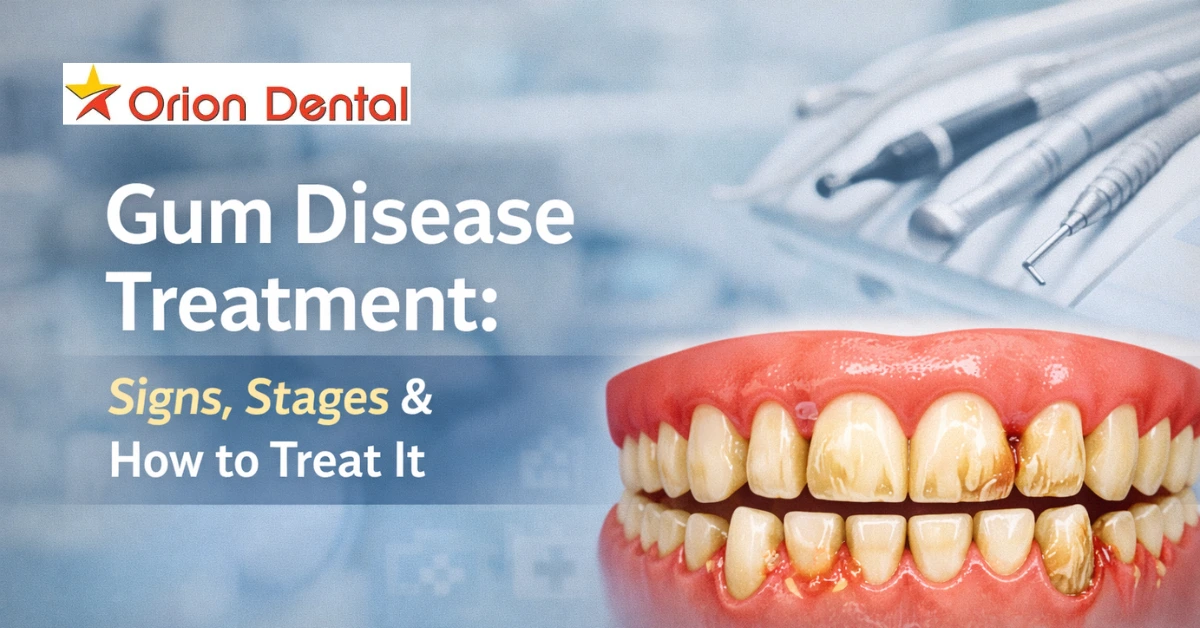
Gum disease is inflammation and infection of the gum tissue caused by plaque and tartar buildup along the gum line:
- Gingivitis: early stage—gums are red, swollen, and bleed easily; no bone loss yet.
- Periodontitis: advanced stage—pockets form between teeth and gums, leading to bone loss and, potentially, tooth loss.
Signs and symptoms of gum disease
- Bleeding gums when you brush or floss
- Red, swollen, or tender gums; gum recession
- Persistent bad breath or bad taste
- Sensitive teeth or loose teeth
- Pain when chewing; changes in how your teeth fit together
If you notice these signs of gum disease, book an assessment in Milton or Scarborough.
Is gum disease infectious?
Yes—gum disease is related to bacteria that can be shared through saliva. While you can’t “catch” periodontitis instantly, exchanging saliva (e.g., sharing utensils, kissing) may transfer bacteria that contribute to gum inflammation, especially if oral hygiene is poor. Good home care and regular cleanings help protect your teeth and gums.
Can you cure gum disease without a dentist?
- Gingivitis can often be reversed at home with consistent brushing twice a day, flossing daily, and professional cleanings.
- Periodontitis cannot be cured at home. Once bone loss and pockets are present, you need professional periodontal therapy (e.g., scaling and root planing) to remove hardened buildup below the gum line and help gums reattach.
Home care is essential—but advanced disease requires dental treatment.
Causes of gum disease
- Plaque and tartar buildup from inadequate brushing and flossing
- Smoking or vaping
- Diabetes and certain medications that reduce saliva
- Hormonal changes (pregnancy, menopause)
- Crooked teeth that are harder to clean
- Family history of periodontal disease
Gum disease treatment options
Professional evaluation and diagnosis
We measure pocket depths around each tooth, assess bone levels on X‑rays, and identify the stage of gum disease to build a targeted plan.
Scaling and root planing (deep cleaning)
- Removes plaque and tartar above and below the gum line
- Smooths root surfaces to help gums reattach
- Often completed in quadrants with local anesthesia for comfort
Periodontal maintenance
- More frequent cleanings (every 3–4 months) to control bacterial regrowth and maintain healing
Adjunctive therapies
- Local or systemic antibiotics when indicated
- Antimicrobial rinses and prescription toothpaste
- Bite adjustments or nightguards if clenching/grinding worsens inflammation
Surgical options (for advanced periodontitis)
- Pocket reduction surgery to access deep deposits and reduce pocket depths
- Regenerative procedures or grafting to restore lost gum or support tissues when possible
We’ll explain the stage of gum disease present and the best treatment options for your oral health.
How to prevent gum disease and protect your tooth and gum health
- Brush your teeth twice a day with fluoride toothpaste
- Floss once daily or use correctly sized interdental brushes
- Limit sugary and acidic snacks; drink water throughout the day
- Don’t smoke; seek support to quit if needed
- Keep regular dental checkups and professional cleanings
- Manage dry mouth and medical conditions with guidance from your dentist and physician
FAQs: Treating gum disease
What is the best way to treat gum disease at home?
Brush twice daily, floss daily, and use an antimicrobial rinse if recommended. These steps can reverse gingivitis. If bleeding persists beyond a week, schedule a dental visit.
Can gum disease be cured?
Gingivitis can be fully reversed. Periodontitis is a chronic condition that can be controlled—not “cured”—with scaling and root planing, possible surgery, and ongoing periodontal maintenance.
How long does gum disease treatment take?
Deep cleaning is often completed over 1–2 visits per side of the mouth. Initial healing is assessed in 4–6 weeks, followed by maintenance visits every 3–4 months.
Will treatment be painful?
We use local anesthesia for comfort during scaling and root planing. Mild post‑procedure tenderness is common and typically managed with over‑the‑counter pain relief.
What toothpaste is best for gum disease?
Look for fluoride toothpaste; stannous fluoride formulas can help reduce gum inflammation. Your dentist may prescribe a specific toothpaste or rinse based on your needs.
Can gum disease cause tooth loss?
Yes. Untreated periodontitis can lead to bone loss, gum recession, and tooth loss. Early treatment helps protect your teeth.
Why choose Orion Dental for gum disease treatment?
- Comprehensive periodontal evaluations and individualized treatment plans
- Gentle, thorough scaling and root planing with modern comfort options
- Clear home‑care coaching to improve daily oral hygiene
- Convenient follow‑ups in Milton and Scarborough
Ready to treat gum disease and protect your oral health? Book a consultation at Orion Dental Milton or Orion Dental Scarborough. We’ll identify your stage of gum disease and create a personalized plan to restore healthy gums.