
What Are Implant Restorations?
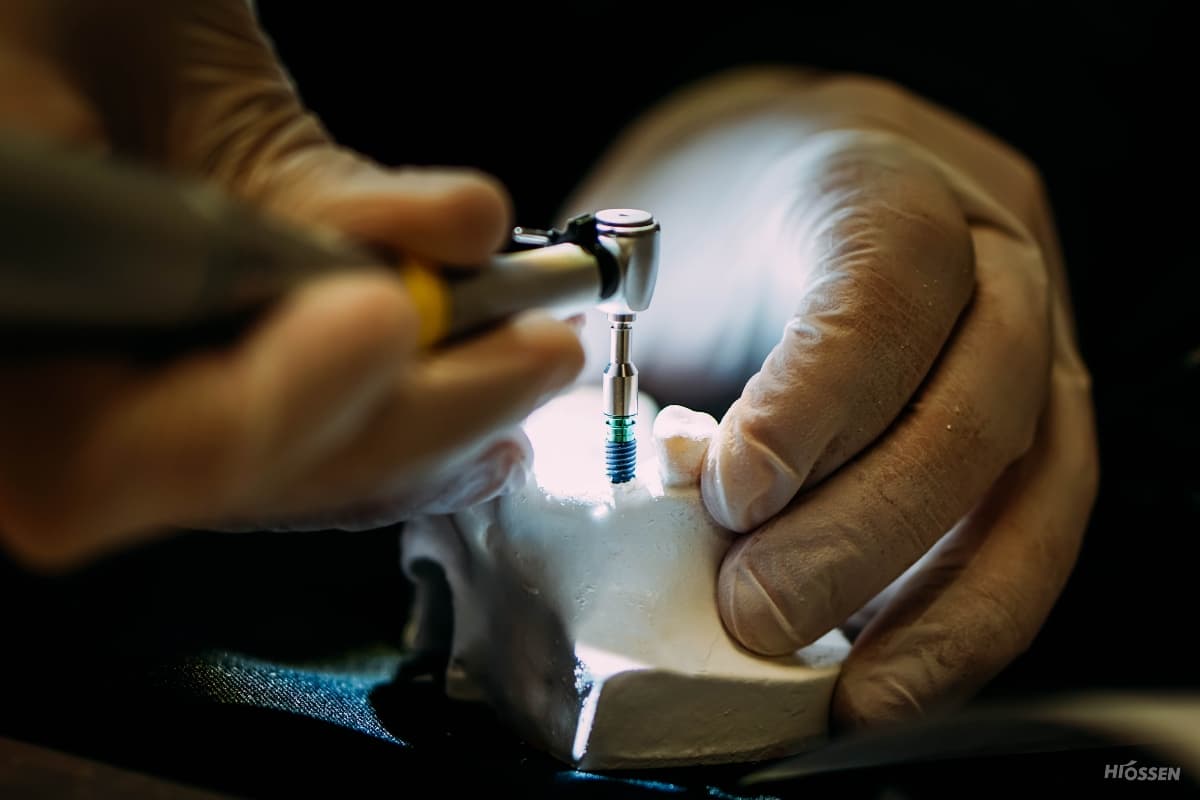
An implant restoration is the prosthetic tooth or set of teeth that is attached to a dental implant post. While the implant post — a small titanium screw placed in the jawbone — serves as the artificial root, the restoration is the visible, functional part of the replacement tooth. Implant restorations are designed to closely replicate the appearance, feel, and function of natural teeth.
3 types
Crown, bridge, or denture
Custom
Made by a dental laboratory
Natural
Look and function
Same Day
Temporary restorations
Why the restoration matters as much as the implant
Who Provides Implant Restorations at Orion Dental?
Dr. Fahimay Naqvi, a general dentist, and our team provide implant restoration services at our Scarborough and Milton offices. We work closely with dental laboratories to create custom restorations designed to fit well, look natural, and function comfortably. Whether you need a single implant crown, an implant-supported bridge, or implant-supported dentures, we manage the restorative phase of your implant treatment from planning through final placement.
How Does the Implant Restoration Process Work?
The journey from implant placement to final restoration involves several carefully planned stages. Understanding this process can help you know what to expect at each step.
Implant Evaluation & Treatment Planning
Before any restoration work begins, your dentist confirms that the implant has fully integrated with the jawbone through X-rays and clinical examination. Bite records, shade matching, and digital scans are taken to plan a restoration that fits your unique anatomy and smile.
Abutment Placement
Once osseointegration is confirmed, a small connector piece called an abutment is attached to the top of the implant post. The abutment protrudes through the gumline and serves as the anchor for the final restoration. A brief healing period of one to two weeks allows the surrounding gum tissue to settle before impressions are taken.
Impression & Laboratory Fabrication
Detailed impressions of the implant site and neighbouring teeth — taken digitally or with traditional materials — are sent to a dental laboratory. Skilled technicians craft your custom restoration, matching the colour, contour, and size of your natural teeth for a seamless result.
Final Restoration Placement
At your final appointment, the custom restoration is attached to the abutment. Your dentist carefully checks the fit, bite alignment, and appearance, making any fine adjustments before securing the crown, bridge, or denture. You leave with a fully functional, natural-looking tooth replacement.
What Types of Implant Restoration Are There?
Implant restorations come in several forms, each suited to different clinical needs depending on how many teeth are being replaced and the condition of the surrounding teeth and bone.
Single Implant Crown
Replaces one missing tooth with a custom crown matched to your natural teeth — no modification of adjacent teeth required. The implant stimulates the jawbone to prevent bone loss.
Implant-Supported Bridge
Two or more strategically placed implants support a connected series of artificial teeth, replacing multiple adjacent missing teeth without altering healthy neighbouring teeth.
Implant-Retained Dentures (Overdentures)
A denture that snaps onto implant attachments for added stability compared with a conventional denture. Removable for cleaning, but held firmly in place — eliminating slipping, clicking, and adhesive.
All-on-4 Fixed Full-Arch
Four strategically angled implants support a complete arch of teeth in a single procedure. A cost-effective way to restore an entire jaw without individual implants for every tooth.
Hybrid Prosthetics
Fixed to implants and only removable by a dentist, hybrid prosthetics combine the stability of fixed restorations with the cost efficiency of a full-arch design.
Zirconia Restorations
High-strength, metal-free zirconia crowns and bridges are durable and tooth-coloured — ideal for patients with metal sensitivities.
Ready to complete your implant treatment? Our team will guide you through every step of the restoration process — from first impression to final placement.
Book a Restoration ConsultationSingle Implant Crown
A single implant crown replaces one missing tooth. One implant post is placed in the jawbone, and a custom crown is attached to it via the abutment. The crown is shaped and coloured to match the adjacent natural teeth. Single implant crowns are a popular choice because they replace the missing tooth without affecting the neighbouring teeth — unlike a traditional bridge, which requires the adjacent teeth to be reduced to serve as anchors.
Single implant crowns function like natural teeth. They allow normal chewing, brushing, and flossing. Because the implant stimulates the jawbone in the same way a natural tooth root does, it helps prevent the bone loss that typically occurs after a tooth is lost.
Implant-Supported Bridge
When two or more adjacent teeth are missing, an implant-supported bridge may be recommended. Rather than placing an individual implant for each missing tooth, two or more implants are placed at strategic positions, and a bridge — a connected series of artificial teeth — is attached to them. For example, three missing teeth may be replaced with a bridge supported by two implants, one at each end.
Implant-supported bridges offer several advantages over traditional bridges. They do not require the modification of healthy adjacent teeth, they provide stable chewing function, and the implants help preserve the jawbone in the area of the missing teeth. The bridge itself is custom-made to match the colour and contour of your natural teeth for a seamless appearance.
Implant-Supported Dentures
For patients who are missing most or all of their teeth in one or both arches, implant-supported dentures offer a more stable and comfortable alternative to traditional removable dentures. A series of implants — typically four to six per arch — are placed in the jawbone, and a custom denture is attached to them.
Implant-supported dentures can be either fixed or removable:
- Fixed implant-supported dentures (sometimes called hybrid dentures or fixed full-arch restorations) are fixed to the implants and can only be removed by a dentist. They feel and function much like natural teeth and do not need to be taken out for cleaning — although special oral hygiene techniques are needed to clean underneath the denture.
- Removable implant-supported dentures (also called overdentures) snap onto the implants using attachment systems such as locators or bar-and-clip mechanisms. The patient can remove them for cleaning but enjoys much greater stability than a conventional denture because the implants hold the denture firmly in place. This eliminates the common problems of slipping, clicking, and the need for denture adhesive.
What Materials Are Implant Restorations Made From?
The choice of material for an implant restoration depends on the location of the tooth, the forces it will bear, and aesthetic considerations:
- Porcelain (ceramic): Provides a natural, tooth-coloured appearance with good translucency. Porcelain is commonly used for implant crowns in the front of the mouth where aesthetics are a primary concern.
- Zirconia: A very strong ceramic material that can be used for both the abutment and the crown. Zirconia restorations are tooth-coloured, durable, and biocompatible. They are increasingly used for both anterior and posterior implant restorations.
- Porcelain fused to metal (PFM): Combines a metal substructure for strength with a porcelain exterior for aesthetics. PFM restorations have a long clinical track record and are sometimes used for implant crowns on back teeth where chewing forces are significant.
- Acrylic and composite: These materials are used for implant-supported dentures. They are lighter in weight and can be repaired or adjusted more easily than ceramic materials.
Which Material Is Right for You?
The right material depends on your situation. Your dentist will discuss the material options with you and recommend the one that provides the most appropriate balance of strength, appearance, and longevity for your specific situation.
Zirconia: a widely used material for implant crowns
How Do You Care for an Implant Restoration?
Implant restorations require consistent daily care to maintain their function and the health of the surrounding tissues. Although implant-supported teeth cannot develop cavities, the gum tissue and bone around the implant can become inflamed or infected if oral hygiene is neglected — a condition known as peri-implantitis.
- Brush at least twice daily with a soft-bristled toothbrush, paying careful attention to the area where the restoration meets the gumline
- Floss daily around single implant crowns. For implant-supported bridges and dentures, use floss threaders, interdental brushes, or a water flosser to clean areas that are difficult to reach
- Attend regular dental checkups and professional cleanings — your dentist will use specialized instruments to clean around the implant without scratching the surface
- Avoid chewing on hard objects such as ice, hard candy, or popcorn kernels, which can chip or damage the restoration
- If you grind or clench your teeth, discuss a night guard with your dentist to protect your implant restorations from excessive force
- Do not smoke or use tobacco products, as tobacco use is associated with higher rates of implant complications and peri-implantitis
When Does an Implant Restoration Need Replacing?
While the implant post itself can last many years with proper care, the restoration on top may eventually need attention. Over time, the crown, bridge, or denture can experience wear, chipping, or loosening. Changes in the surrounding gum tissue or bite alignment can also affect the fit of the restoration.
One of the advantages of implant-based restorations is modularity — if the restoration becomes worn or damaged, it can typically be replaced or repaired without affecting the underlying implant post, provided the implant remains healthy and well-integrated with the bone. Regular dental monitoring helps identify any issues early, allowing for timely intervention.
Signs your restoration may need attention
Implant Restorations at Orion Dental
At Orion Dental, we manage the complete restorative phase of dental implant treatment. From the initial planning and impression-taking through the fabrication and final placement of your custom restoration, our team carries out every step with care and precision. We coordinate closely with trusted dental laboratories to produce restorations that meet high standards of fit, function, and appearance.
If you have existing dental implants that need restorations, or if you are considering implant treatment and want to understand what the complete process involves, book a consultation online or contact our Scarborough office at 416-291-0306 or our Milton office at 905-636-9770.