
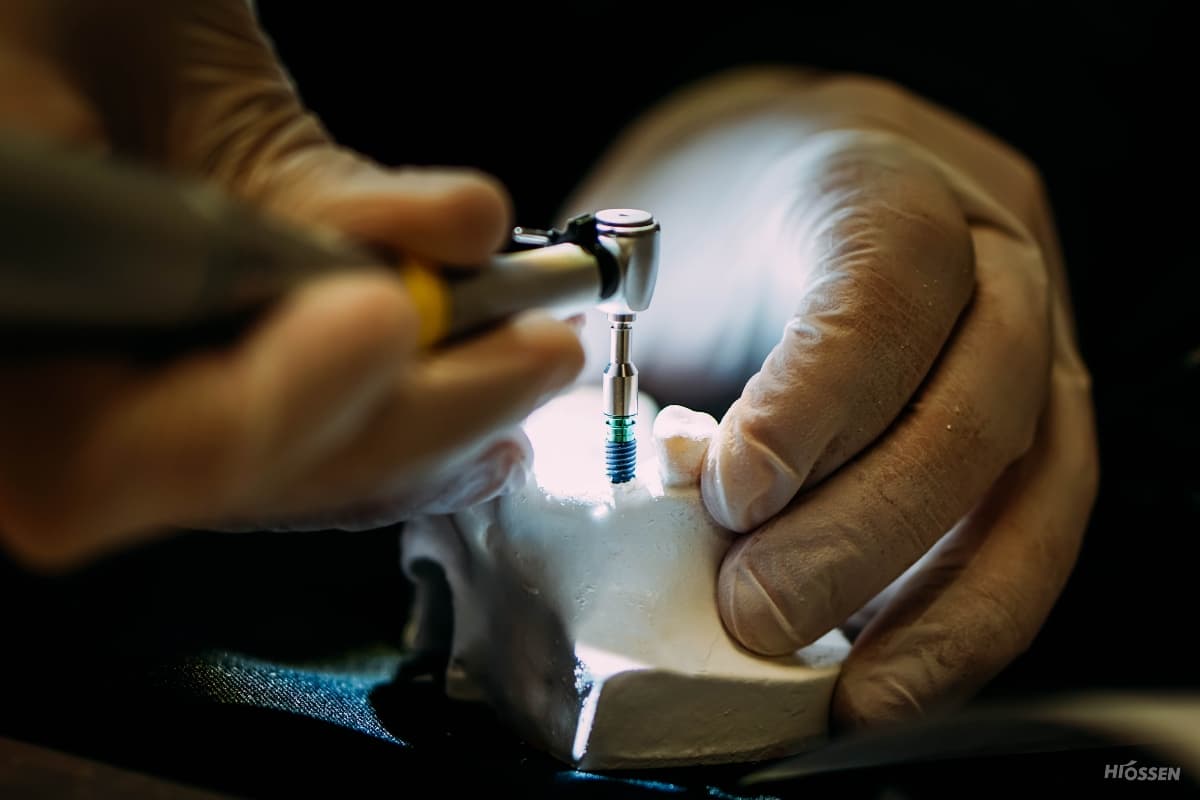
Understanding Dental Implants
Dental implants are a widely used method for replacing missing teeth. Unlike removable dentures or traditional bridges, implants are anchored directly into the jawbone, providing a stable foundation for replacement teeth that look, feel, and function similarly to natural teeth.
At Orion Dental, we provide dental implant consultations and treatment at our Scarborough and Milton offices. Our dentists will assess your oral health, discuss your options, and help you determine whether implants are the right choice for your situation.
3 parts
Post, abutment, restoration
30+
Years of Dr. Naqvi experience
3–6mo
Typical healing time
Titanium
Biocompatible implant post
How Do Dental Implants Work?
A dental implant system has three main components:
- The implant post: A small titanium screw that is placed into the jawbone. Titanium is biocompatible, meaning the bone naturally grows around and bonds with the implant in a process called osseointegration.
- The abutment: A connector piece that sits on top of the implant post and holds the final restoration in place.
- The restoration: The visible part of the tooth — a custom-made crown, bridge, or denture designed to match the colour and shape of your natural teeth.
What Is the Dental Implant Process?
The implant process typically involves several stages spread over a few months. Here is what to expect at each step:
Consultation and Planning
Your dentist will conduct a thorough examination, including digital X-rays and possibly 3D imaging, to evaluate your jawbone density, gum health, and the position of surrounding teeth. This information is used to create a precise treatment plan.
Implant Placement
The implant post is surgically placed into the jawbone under local anaesthesia. For patients who experience dental anxiety, sedation options are available. After placement, the surgical site is closed and the healing process begins.
Healing and Osseointegration
Over the next three to six months, the jawbone grows around the implant post, securing it in place. During this period, a temporary restoration may be placed to maintain your appearance and function.
Abutment and Final Restoration
Once the implant has fully integrated with the bone, the abutment is attached. Impressions are taken to create your custom crown, bridge, or denture. The final restoration is then placed, completing the process.
Advanced Imaging for Precise Placement
We use digital X-rays and 3D imaging technology to plan each implant placement with precision, supporting accurate positioning for long-term success and comfort.
What Types of Implant Restorations Are Available?
Dental implants can support different types of restorations depending on how many teeth need to be replaced:
Single Tooth Implant
One implant post topped with a custom crown replaces a single missing tooth without affecting adjacent teeth.
Implant-Supported Bridge
Two or more implants support a bridge to replace several adjacent missing teeth, eliminating the need to modify healthy neighbouring teeth.
Implant-Supported Dentures
Implants anchor a full or partial denture for patients missing most or all teeth — more stable than traditional removable dentures with no adhesive required.
Full-Arch Restoration
A complete arch of teeth can be supported by as few as four to six strategically placed implants, restoring an entire upper or lower set of teeth.
Whether you need a single crown, a bridge, or a full set of implant-supported dentures, your dentist will recommend the restoration type that best suits your needs.
Considering dental implants? Book a no-obligation consultation to find out if implants are the right solution for you.
Book Your Implant ConsultationWhat Are the Benefits of Dental Implants?
Dental implants offer several advantages compared to other tooth replacement options:
Durable Solution
With proper care, the implant post can last many years. The crown on top may need replacement over time due to normal wear.
Preserves Jawbone
Implants stimulate the jawbone just like natural tooth roots, helping prevent the bone loss that often follows tooth extraction.
Natural Look and Feel
Custom-crafted restorations are designed to match the colour and shape of your natural teeth, so your smile is designed to look and feel natural.
No Adjacent Tooth Modification
Unlike traditional bridges, implants do not require grinding down healthy neighbouring teeth for support.
Eat and Speak with Confidence
Implants function like your own teeth — no slipping, no adhesives, no dietary restrictions.
Independently Anchored
Each implant stands on its own, so surrounding teeth are not affected or put under additional stress.
Do I Need Bone Grafting Before Implants?
If your jawbone has lost density due to tooth loss, gum disease, or other factors, a bone graft may be needed before an implant can be placed. Bone grafting involves adding bone material to the jaw to create a sufficient foundation for the implant. This adds time to the overall treatment but is sometimes necessary to support the long-term success of the implant.
Bone Grafting Considerations
Not everyone requires bone grafting. Your dentist will evaluate your jawbone density during your consultation using digital imaging. If grafting is needed, it is a well-established procedure that builds up the foundation an implant needs. The additional healing time is typically three to six months before implant placement can proceed.
Who Is a Good Candidate for Dental Implants?
Most adults who are in reasonable general health and have sufficient jawbone density are potential candidates for dental implants. During your consultation at our Scarborough or Milton office, your dentist will evaluate several factors to determine whether implants are appropriate for your situation. These include the density and volume of your jawbone, the health of your gums, your overall medical history, and any medications you are taking.
Certain conditions may affect the success of implant treatment. Uncontrolled diabetes can slow healing after surgery, while heavy tobacco use is associated with higher rates of implant failure. Patients with significant bone loss may require a bone graft before implant placement. Conditions such as gum disease should be treated and stabilized before proceeding. Your dentist will discuss any individual considerations with you and help you understand whether implants, a bridge, or dentures represent the most suitable path forward.
How Do Missing Teeth Affect Your Overall Health?
Missing teeth affect more than your appearance. When a tooth is lost, the jawbone in that area no longer receives the stimulation it needs from chewing, and it begins to resorb — a gradual loss of bone density and volume. Over time, this bone loss can alter the shape of your face and compromise the stability of neighbouring teeth.
Missing teeth can also affect nutrition. People who have difficulty chewing may avoid certain foods — particularly raw fruits, vegetables, and proteins — which can lead to a less balanced diet. Speech can also be affected, particularly when front teeth are missing. Dental implants address these concerns by providing a stable, functional replacement that preserves bone and restores normal chewing ability. If you are considering your options for replacing missing teeth, a consultation with your dentist can help you weigh the long-term health benefits of each approach.
How Should You Care for Dental Implants?
Dental implants require the same care as natural teeth. To maintain your implants and keep them in good condition:
Brush Twice Daily
Use a soft-bristled toothbrush and fluoride toothpaste, paying close attention to the gum line around your implant.
Floss Every Day
Floss daily around the implant site. Your dentist may recommend a water flosser or interdental brush for easier cleaning.
Regular Dental Checkups
Attend regular checkups and professional cleanings to monitor your implant and keep the surrounding gums healthy.
Protect Against Grinding
If you grind your teeth, ask about a night guard to protect your implants and restorations from excessive wear.
Be sure to attend regular dental checkups and avoid chewing on hard objects such as ice or hard candy. If you grind your teeth, ask about a night guard to protect your implants.
Insurance & Payment Options
The cost of dental implants varies depending on the number of implants needed, whether bone grafting is required, and the type of restoration. Some dental insurance plans offer partial coverage for implants. During your consultation, we will provide a detailed cost estimate and discuss payment options to help make treatment accessible. Contact our office to verify your specific coverage.
Dental Implants at Orion Dental
At Orion Dental, we provide comprehensive dental implant services from consultation through final restoration. We take time to explain the process, discuss your options, and answer your questions so you feel well-informed at every step.
To learn whether dental implants are right for you, book a consultation online or contact our Scarborough office at 416-291-0306 or our Milton office at 905-636-9770.