
4.64 out of 5 · 295 Google reviews
4.64 / 5 · Google
295 reviews across Milton & Scarborough.
Dental Implants vs Bridges: Making the Right Choice
A dental implant replaces the entire tooth — root and crown — with a titanium post placed in the jawbone, while a bridge spans the gap by anchoring a false tooth to the two neighbouring teeth, which must be reshaped and crowned. Implants leave the adjacent teeth untouched, but they need enough jawbone and a fusion period of 3 to 4 months, so a bridge remains the more suitable choice in some situations.

Orion Dental Team
Led by Dr. Fahimay Naqvi
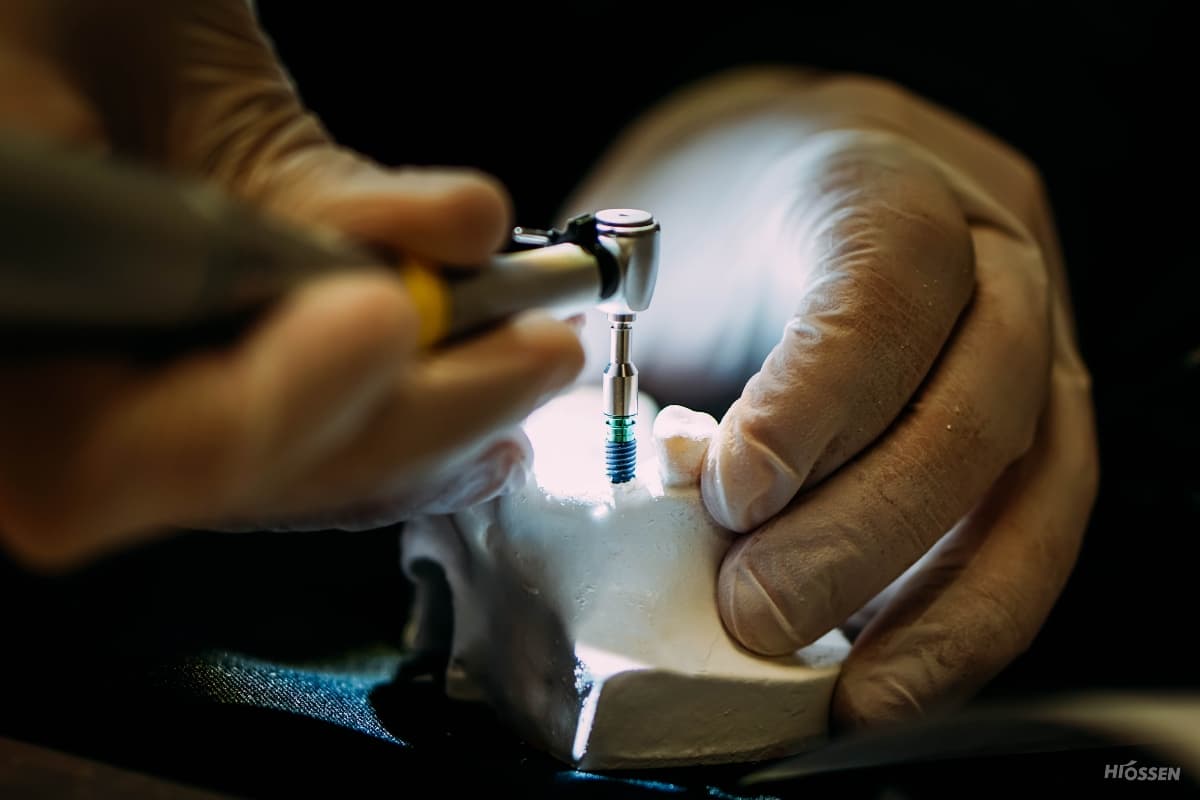
For decades, a dental bridge was the standard solution for replacing a missing tooth. It remains a perfectly valid option for many patients. However, advances in implant dentistry have changed the landscape, offering a solution that more closely replicates the natural tooth in both function and long-term outcomes.
At Orion Dental in Scarborough and Milton, we provide both dental implants and bridges. This guide breaks down the key differences so you can make an informed decision with your dentist.
Longer
expected implant lifespan
Shorter
expected bridge lifespan
Well-established
treatment option
0
adjacent teeth altered by implants
How a Dental Bridge Works
A traditional dental bridge fills a gap by anchoring a false tooth (pontic) to the two adjacent teeth. The neighbouring teeth — called abutments — are reshaped and fitted with crowns that hold the pontic in place. The result is a fixed, non-removable restoration that looks and functions reasonably close to a natural tooth.
The Bridge Process
Abutment Preparation
The teeth on either side of the gap are filed down to make room for crowns. This permanently alters healthy tooth structure.
Impressions Taken
Moulds are made so the bridge can be custom-fabricated to fit your bite and match your tooth colour.
Temporary Bridge
A provisional bridge is placed while your permanent one is made at the dental lab — typically 2 to 3 weeks.
Permanent Placement
The final bridge is cemented onto the prepared abutment teeth. No surgery is required.
Bridge Advantages
- No surgery required — suitable for patients who cannot undergo implant placement
- Faster overall treatment time (typically 2 to 3 weeks versus 4 to 6 months)
- Lower upfront cost compared to implants
- Proven, reliable option with decades of clinical history
How a Dental Implant Works
A dental implant replaces the entire tooth structure — both root and crown. A titanium post is placed directly into the jawbone, where it fuses with the bone over 3 to 4 months (osseointegration). A custom crown is then attached to the post via an abutment connector. The result is a standalone tooth replacement that does not affect adjacent teeth in any way.
Implant Advantages
- Preserves jawbone by stimulating bone growth, preventing resorption
- Does not alter or depend on adjacent healthy teeth
- Looks, feels, and functions like a natural tooth
- Easier to clean — brush and floss normally with no special techniques
- Prevents the domino effect of shifting teeth and further tooth loss
Implants vs Bridges: Side-by-Side Comparison
This table highlights the key differences between the two options:
| Factor | Dental Implant | Dental Bridge |
|---|---|---|
| How it works | Titanium post in jawbone + crown | Pontic anchored to adjacent teeth |
| Surgery required | Yes — minor oral surgery | No surgery |
| Adjacent teeth affected | None | Two teeth permanently reshaped |
| Treatment timeline | 4–6 months | 2–3 weeks |
| Bone preservation | Yes — stimulates jawbone | No — bone loss continues under pontic |
| Cleaning & maintenance | Brush and floss normally | Requires floss threaders or special brushes |
| Upfront cost | Higher | Lower |
| Feel & function | Closest to natural tooth | Good, but may feel slightly different |
Not Sure Which Option Is Right for You?
A consultation helps you understand your options clearly — with a personalised recommendation based on your situation.
When a Bridge May Be the Better Choice
While implants suit many people, there are circumstances where a bridge is the more appropriate option:
Bridge May Be Preferred When
- The adjacent teeth already have large fillings or crowns and would benefit from new crowns regardless
- Medical conditions make surgery inadvisable
- Jawbone volume is insufficient and the patient declines bone grafting
- A faster treatment timeline is needed
- Budget constraints make the lower upfront cost of a bridge more practical
Both Options Have Value
Neither choice is universally “better” — the right answer depends on your individual oral health, medical history, and goals. Your dentist will review all relevant factors and help you choose the option that serves you best long-term.
When an Implant Is the Stronger Option
For patients who are candidates, implants may be the stronger option when:
Implant May Be Preferred When
- The adjacent teeth are healthy and do not need crowns
- Long-term durability is a priority — you want a solution that may last many years
- Preserving jawbone volume is important, especially in the front of the mouth
- You want a tooth replacement that requires no special cleaning techniques
- You are in good general health and have adequate bone density
The Shift Toward Implants in Modern Dentistry
Implants have become a common way to replace a missing tooth. Two reasons are often given: an implant does not require reshaping the neighbouring teeth, and it can help maintain bone volume where the tooth was lost.
Dr. Fahimay Naqvi, a general dentist, is a Fellow of the International Congress of Oral Implantologists and an Associate Fellow of the American Academy of Implant Dentistry. Whether an implant suits you depends on a clinical assessment, and individual results vary.
That said, bridges remain a reliable, proven option and are the right choice for certain clinical situations. The goal is always to recommend the treatment that suits your situation — not to default to one solution for every patient.
Did You Know?
How long an implant or a bridge lasts varies from person to person. Both remain reasonable options — your dentist can discuss which one suits your bone, bite and overall health.
Your Next Step
Whether you are leaning toward a dental implant or a bridge, the best starting point is a thorough evaluation. Our team at Orion Dental will assess your oral health, discuss your goals, and present a clear recommendation.
Book a consultation at our Scarborough or Milton office. Book an appointment or call 416-291-0306 (Scarborough) / 905-636-9770 (Milton).
Frequently Asked Questions
Common questions about implants and bridges
What is the main difference between an implant and a bridge?
A dental implant replaces the entire tooth — root and crown — using a titanium post anchored in the jawbone. A bridge spans the gap by anchoring an artificial tooth to the two neighbouring teeth, which must be filed down to accept crowns.
Which lasts longer, a dental implant or a bridge?
How long an implant or a bridge lasts varies from person to person. It depends on your bone, bite, oral hygiene, general health and regular dental care. Your dentist can talk you through what to expect in your situation.
Is a bridge cheaper than an implant?
The upfront cost of a bridge is usually lower. However, when you factor in replacements over time and potential complications with the supporting teeth, implants often prove more cost-effective in the long run.
Do I need a bone graft for a dental implant?
Not always. If your jawbone has sufficient volume and density, the implant can be placed directly. A bone graft is only needed when bone loss has occurred at the implant site — your dentist will assess this with digital X-rays.
Can a bridge cause damage to adjacent teeth?
Yes. Preparing the abutment teeth requires removing healthy enamel, which weakens those teeth permanently. Over time, the supporting teeth may develop decay under the bridge crowns or experience stress from bearing the extra load.
How do I decide between an implant and a bridge?
The best choice depends on your jawbone health, budget, overall oral health, and personal preferences. Your dentist will review all factors with you and recommend the option that offers the best long-term outcome for your specific situation.
Related Articles
Continue reading about dental health