
4.64 out of 5 · 295 Google reviews
4.64 / 5 · Google
295 reviews across Milton & Scarborough.
5 Signs You Need to See Your Dentist
You should book a dental appointment when any of five signs appear: a cracked, chipped or knocked-out tooth, a deep cut inside the mouth that keeps bleeding, a toothache lasting more than a day or two, gums that bleed or stay swollen, or persistent jaw pain. A knocked-out permanent tooth is urgent — keep it moist in milk and get to a dentist within 30 minutes. Many dental problems begin with little or no pain, so waiting for discomfort is not a reliable guide.

Orion Dental Team
Led by Dr. Fahimay Naqvi
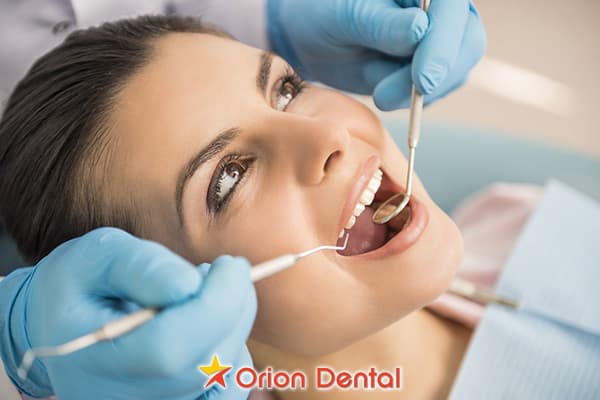
Dental problems range from the obvious — a knocked-out tooth from a sports injury — to the subtle, like a dull ache that comes and goes. The challenge is that many dental conditions start without significant pain, which leads people to delay care until the problem has become more complex and more costly to treat.
At Orion Dental in Scarborough and Milton, we encourage patients to pay attention to what their mouth is telling them. Here are five signs that it is time to book an appointment.
Often
early decay has no symptoms
30 min
window for a knocked-out tooth
Common
gum disease in adults over 30
Many
dental emergencies are preventable
Sign 1: A Traumatic Mouth Injury
Accidents happen — during sports, at home, or simply from an unexpected fall. A cracked, chipped, broken, or knocked-out tooth requires immediate dental attention. Even if the tooth looks intact after an impact, internal damage to the nerve or root can occur without visible signs.
If a tooth is knocked out completely, time is critical. Pick up the tooth by the crown (not the root), gently rinse it with milk or saline, and try to place it back in the socket. If that is not possible, keep it moist in milk and get to a dentist within 30 minutes for the best chance of saving it.
Emergency Action
For a knocked-out permanent tooth, every minute matters. Contact our emergency dental team immediately — we accommodate same-day emergencies at both locations.
Sign 2: Serious Cuts Inside Your Mouth
Deep cuts or lacerations to the gums, lips, tongue, or inner cheeks can occur from biting down on something hard, a fall, or contact during sports. While minor cuts often heal on their own, a deep cut that bleeds heavily, does not stop bleeding after 10 minutes of pressure, or shows signs of infection (redness, swelling, pus) needs professional evaluation.
Your dentist can assess whether stitches are needed, check for damage to nearby teeth, and provide guidance on proper wound care to prevent infection. Dentists treat more than just teeth — they are trained to manage injuries to all the soft tissues of the mouth.
Sign 3: A Persistent Toothache
A toothache is your body's way of signalling that something is wrong. The pain may be sharp and sudden, dull and persistent, or triggered by hot, cold, or sweet foods. Regardless of the type, a toothache that lasts more than a day or two warrants a dental visit.
Common causes include cavities, a cracked tooth, an exposed root surface, or a dental abscess — a pocket of infection at the root of a tooth. An abscess, in particular, can become a serious health concern if left untreated, potentially spreading to surrounding tissues. Early treatment typically means a simpler procedure such as a filling or root canal rather than a more complex intervention later.
Toothache Red Flags
- Pain that lasts more than 1–2 days
- Swelling in the gums, face, or jaw
- Fever or general feeling of being unwell
- Foul taste in the mouth (possible sign of abscess drainage)
- Pain that radiates to the ear, jaw, or head
- Difficulty opening your mouth or swallowing
Don't Ignore the Warning Signs
The sooner you see a dentist, the simpler (and less costly) treatment tends to be.
Sign 4: Sore, Swollen, or Bleeding Gums
If your gums bleed when you brush or floss, appear red and puffy, or feel tender to the touch, these are classic signs of gingivitis — the earliest stage of gum disease. Occasional minor bleeding from aggressive brushing may not be cause for alarm, but persistent or recurring symptoms should be evaluated.
Left untreated, gingivitis can progress to periodontitis, which involves bone loss and can ultimately lead to tooth loss. The encouraging news is that gingivitis is fully reversible with professional treatment and improved home care. A professional cleaning and a solid daily routine of brushing and flossing can typically resolve early-stage gum disease within weeks.
Reversing Early Gum Disease
Bleeding Gums
Gums bleed when brushing or flossing — often the first sign of gingivitis.
Professional Cleaning
Your dental hygienist removes plaque and tartar that home brushing cannot reach.
Improved Home Care
Brush twice daily, floss daily, and use an antimicrobial rinse if recommended.
Healthy Gums Restored
With consistent care, gingivitis typically resolves within 2–3 weeks.
Sign 5: Persistent Jaw Pain
Jaw pain is often overlooked as a dental concern, but it can have several dental causes. The most common is bruxism (teeth grinding), which typically happens during sleep and can cause jaw stiffness, headaches, and significant tooth wear over time. Your dentist can identify signs of grinding during an exam and may recommend a custom night guard to protect your teeth while you sleep.
Another common cause is temporomandibular joint (TMJ) disorder, which affects the joint connecting your jaw to your skull. Symptoms include clicking or popping when you open your mouth, difficulty chewing, and pain around the ear. Less commonly, jaw pain can indicate an infection or abscess in a nearby tooth.
| Symptom | Possible Cause | Action |
|---|---|---|
| Morning jaw stiffness & headaches | Bruxism (teeth grinding) | Dental exam + custom night guard |
| Clicking or popping when opening mouth | TMJ disorder | Dental evaluation + possible physiotherapy |
| Pain when chewing + swelling | Tooth infection or abscess | Urgent dental appointment |
| Jaw locking open or closed | TMJ disorder (advanced) | See your dentist promptly |
| Pain after recent dental work | Normal healing (temporary) | Monitor; contact dentist if worsening |
Your Dentist Treats More Than Teeth
It is worth remembering that your dentist is trained to diagnose and treat conditions affecting the gums, tongue, cheeks, lips, jaw, and surrounding tissues — not just teeth. Persistent sores, unusual lumps, white or red patches inside the mouth, and chronic bad breath can all be signs of conditions that benefit from professional evaluation.
Regular dental checkups include an oral cancer screening and a thorough examination of all oral tissues. This routine screening is one of the most important reasons to maintain regular visits, even when nothing seems wrong.
Prevention Is Always Best
Most dental problems are easier and less expensive to treat when caught early. Regular checkups — typically every six months — give your dentist the opportunity to identify issues before they become emergencies.
Don't Wait for Pain to Become a Crisis
If any of these five signs apply to you, do not put off making an appointment. Early intervention is almost always simpler, less invasive, and less costly than waiting until a problem becomes severe.
Contact Orion Dental at our Scarborough or Milton office. Book an appointment or call 416-291-0306 (Scarborough) / 905-636-9770 (Milton).
Frequently Asked Questions
Common questions about dental warning signs and emergencies
When should I see a dentist for a toothache?
You should see a dentist as soon as possible if you have a toothache that lasts more than one to two days, is severe, or is accompanied by fever, earache, or pain when opening your mouth. A toothache can indicate a cavity, abscess, or other condition that needs treatment.
Is bleeding when I brush my teeth normal?
Occasional bleeding from aggressive brushing may not be serious, but persistent or regular bleeding when you brush or floss is not normal. It is often an early sign of gum disease (gingivitis) and should be evaluated by your dentist.
What should I do if I chip or crack a tooth?
Contact your dentist as soon as possible. In the meantime, rinse your mouth with warm water, apply a cold compress to reduce swelling, and avoid chewing on the affected side. Save any broken pieces if possible.
Can jaw pain be a dental problem?
Yes. Jaw pain can be caused by teeth grinding (bruxism), TMJ disorder, infection, or an abscess. Your dentist can evaluate the cause and recommend appropriate treatment, which may include a custom night guard, physiotherapy referral, or other interventions.
How quickly should I see a dentist for a dental emergency?
For a knocked-out tooth, seek emergency dental care within 30 minutes if possible. For severe pain, uncontrolled bleeding, or facial swelling, contact your dentist or visit an emergency room the same day.
What counts as a dental emergency?
Dental emergencies include a knocked-out or severely broken tooth, uncontrolled bleeding, severe infection or abscess with swelling, and trauma to the mouth or jaw. If you are unsure, call your dental office — they can advise you on whether same-day care is needed.
Related Articles
Continue reading about dental health
Stages of Gum Disease
Understand the four stages of gum disease, from reversible gingivitis to advanced periodontitis.
Read moreDoes Your Jaw Click? You Might Have a TMJ Disorder
Learn about TMJ disorders, common symptoms, and treatment options.
Read moreHow Your Dentist Can Help Treat Cracked or Broken Teeth
Treatment options for cracked, chipped, and broken teeth — from bonding to crowns.
Read more