
4.64 out of 5 · 295 Google reviews
4.64 / 5 · Google
295 reviews across Milton & Scarborough.
Kids Dental Care: Why Good Brushing Starts Early
Start cleaning your baby's gums with a soft, damp cloth from birth, then switch to a soft-bristled baby toothbrush once the first tooth appears at around six months. Use a rice-grain smear of fluoride toothpaste under age three and a pea-sized amount from three to six, brushing twice daily. Most children need a parent to supervise or finish the job until about age seven or eight, when the fine motor skills for independent brushing develop.

Orion Dental Team
Led by Dr. Fahimay Naqvi
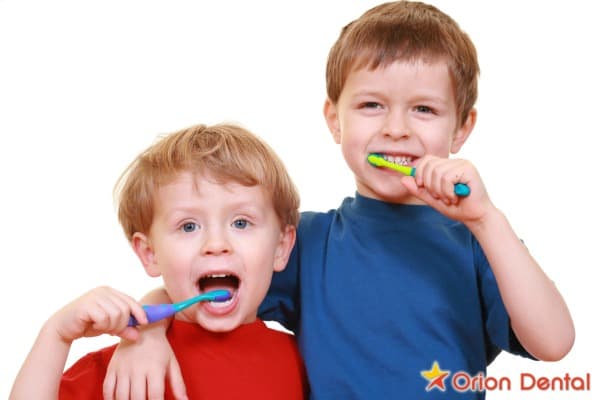
Teaching your child to brush properly is one of the most impactful things you can do for their long-term oral health. Good brushing habits formed early tend to stick, while poor habits are much harder to correct later. The key is making brushing a normal, non-negotiable part of your child's daily routine — and equipping them with the right tools and techniques to do it well.
At Orion Dental in Scarborough and Milton, our children's dentistry team works with families every day to build brushing confidence and prevent cavities. This guide covers everything from choosing the right brush to knowing when your child is ready to brush independently.
2 min
recommended brushing time
2x
per day minimum
Age 7–8
independent brushing ready
Common
cavities in young children
Choosing the Right Tools
It might seem like a small detail, but the toothbrush and toothpaste your child usescan make a significant difference in both effectiveness and willingness to brush. Children's mouths are smaller and more sensitive than adults', so adult-sized brushes and strong-flavoured toothpastes can turn brushing into a battle.
| Tool | What to Look For | What to Avoid |
|---|---|---|
| Toothbrush | Small head, soft bristles, child-sized grip, fun colours or characters | Hard bristles, oversized head, adult-sized handles |
| Toothpaste | Fluoride formula, mild flavour (berry, bubblegum, watermelon) | Strong mint or cinnamon flavours that kids find overwhelming |
| Floss | Child-friendly floss picks or soft ribbon floss | Thin floss that snaps and hurts sensitive gums |
| Timer | Two-minute hourglass, phone timer, or brushing app | No timer at all — most children rush through brushing |
One of the simplest ways to get your child engaged is to let them choose their own toothbrush. Present two or three appropriate options and let them pick. A child who chose their own brush — especially one featuring a favourite character — is far more likely to use it without complaint.
Timing Is Everything: Building the Routine
Consistency is what turns brushing from a chore into a habit. The goal is to brush twice daily — once in the morning and once before bed — at roughly the same times each day. Here are practical tips for building that routine:
Routine-Building Tips
- Schedule brushing after the last snack or drink of the evening so you don't have to repeat it
- Keep a spare toothbrush near the front door for mornings when you're running late
- Pair brushing with another established routine (like bath time or getting pyjamas on)
- Set a recurring alarm or reminder until the habit is automatic
- Make evening brushing the final step before bedtime stories — it becomes part of the wind-down ritual
Pro Tip: Schedule It After the Last Snack
One of the most common mistakes parents make is brushing their child's teeth and then giving them a bedtime snack or a bottle of milk afterwards. This undoes the cleaning you just did. Always schedule brushing after the last food or drink (other than water) of the evening.
Teaching Proper Brushing Technique
Young children don't intuitively know how to brush effectively. They tend to scrub back and forth quickly and focus only on the front teeth. Gentle, circular motions that cover all tooth surfaces — front, back, and chewing surfaces — are far more effective at removing plaque.
The Four Steps of Proper Brushing
Outer Surfaces
Angle the brush at 45 degrees toward the gum line. Use small, gentle circles on the outer surfaces of all teeth.
Inner Surfaces
Tilt the brush vertically for front teeth. Use the same gentle circular motion on the inner (tongue-side) surfaces.
Chewing Surfaces
Hold the brush flat and use short back-and-forth strokes across the biting surfaces of molars.
Tongue
Gently brush the tongue from back to front to remove bacteria that cause bad breath.
To help young children understand the circular motion, try relatable comparisons: “brush like tiny train wheels going around”or “make little circles like a spinning top.” Brushing alongside your child is one of the more helpful teaching methods — children learn by watching, and they're far more likely to do what you do than what you say.
Need Help With Your Child's Brushing Routine?
Our team can demonstrate proper technique during your child's next checkup.
When Can Children Brush on Their Own?
Most children develop the fine motor dexterity needed for effective independent brushing around age seven or eight. A common guideline used by paediatric dentists: if your child can tie their own shoelaces, they're likely ready to brush unsupervised. Before that age, parents should actively brush for the child or, at minimum, do a thorough follow-up brushing after the child has had their turn.
Even once your child is brushing independently, it's wise to spot-check occasionally. Ask them to smile wide so you can look for any areas they may be missing — the back molars and the gum line are common trouble spots. Regular dental checkups will also reveal whether brushing effectiveness needs improvement.
0–12 Months
Parent wipes gums/brushes
1–3 Years
Parent brushes; child watches
3–6 Years
Child tries; parent follows up
7+ Years
Independent with spot-checks
The Power of Parental Example
Children tend to mirror their parents' health behaviours. If your child sees you brushing carefully for a full two minutes, flossing daily, and visiting the dentist regularly, they're far more likely to value and maintain those same habits. Conversely, if oral hygiene is treated as optional or rushed in your household, children will adopt that attitude too.
Consider making brushing a family activity. Brush together at the same time — it reinforces the routine, gives you an opportunity to model proper technique, and turns an otherwise mundane task into a shared moment. Some families even play a favourite two-minute song while they brush together, making it something to look forward to rather than endure.
Brush Together
Make brushing a family event. Children who see their parents brush are more likely to do it willingly.
Keep It Positive
Praise effort, not perfection. Avoid turning brushing into a power struggle or punishment.
Let Them Choose
Allowing your child to pick their toothbrush and toothpaste flavour gives them ownership of the routine.
Be Consistent
The same time, the same routine, every day. Consistency builds habits faster than any other strategy.
Professional Support for Your Child's Dental Health
Good brushing is the foundation, but it works best alongside regular professional care. At your child's dental checkups, our team can demonstrate brushing techniques, recommend dental sealantsfor added cavity protection, and track your child's dental development over time.
Book a children's dental checkup at our Scarborough or Milton office. Book an appointment or call 416-291-0306 (Scarborough) / 905-636-9770 (Milton).
Frequently Asked Questions
Common questions about children's brushing habits
At what age should my child start brushing their teeth?
Start cleaning your baby's gums with a soft, damp cloth from birth. Once the first tooth appears (usually around six months), switch to a soft-bristled baby toothbrush with a rice-grain-sized amount of fluoride toothpaste. Brushing should happen twice daily from this point on.
When can my child brush their teeth independently?
Most children develop the fine motor skills needed for effective independent brushing around age seven or eight. Until then, parents should supervise and assist with brushing to ensure all tooth surfaces are cleaned properly.
What type of toothbrush is best for kids?
Choose a toothbrush with a small head, soft bristles, and a comfortable grip sized for your child's hand. Let your child pick a colour or character they like — kids who choose their own toothbrush are more likely to use it willingly.
How much toothpaste should a child use?
For children under three, use a rice-grain-sized amount of fluoride toothpaste. For children aged three to six, use a pea-sized amount. Teach your child to spit out the toothpaste rather than swallow it.
Is fluoride toothpaste safe for toddlers?
Yes. The Canadian Dental Association recommends fluoride toothpaste from the first tooth. Used in the correct amount (a rice-grain smear for under-threes), the fluoride strengthens enamel and helps prevent cavities with minimal risk of fluorosis.
How do I get my child to brush for a full two minutes?
Use a timer, a two-minute song, or a brushing app with a built-in countdown. Making it fun and consistent is more effective than forcing it — over time, the routine becomes second nature.
Related Articles
Continue reading about children's dental care