
4.64 out of 5 · 295 Google reviews
4.64 / 5 · Google
295 reviews across Milton & Scarborough.
Toothpaste Guide: Choosing the Right One for You
Choose a toothpaste that contains fluoride and carries the Canadian Dental Association seal — those two things matter more than any claim on the front of the box. From there, potassium nitrate formulas ease sensitivity after one to two weeks of daily use, pyrophosphates slow new tartar forming, and stannous fluoride targets bacteria along the gum line. Whitening pastes polish away surface stains only; they do not change the underlying colour of a tooth.

Orion Dental Team
Led by Dr. Fahimay Naqvi
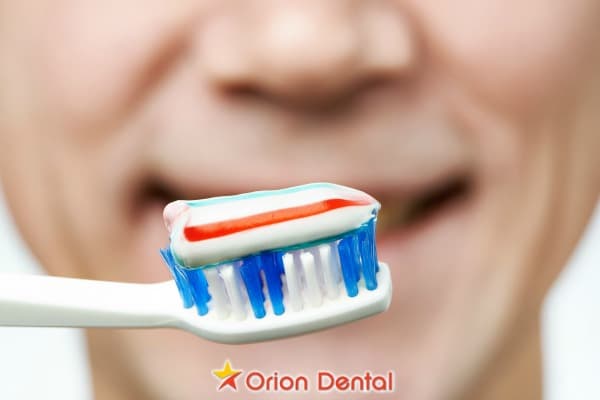
Walk down the oral care aisle at any pharmacy and you will find an almost dizzying number of toothpaste options. Whitening, sensitivity, enamel protection, tartar control, natural, charcoal — the list goes on. Each one promises something different, and it can be hard to know which features actually matter for your teeth.
The good news? Choosing a toothpaste does not have to be complicated. At Orion Dental in Scarborough and Milton, we often get asked which toothpaste we recommend. Here is what we tell our patients.
Fluoride
the key active ingredient
CDA
seal — benefit claims reviewed
2 min
minimum brushing time
Pea
sized amount for adults
Fluoride: The Non-Negotiable Ingredient
Regardless of which specialty toothpaste you choose, the single most important thing to look for is fluoride. Fluoride is a naturally occurring mineral that strengthens tooth enamel, helps remineralise early decay, and makes your teeth more resistant to acid attacks from bacteria.
The Canadian Dental Association recommends fluoride toothpaste for everyone — children included (with age-appropriate amounts). Without fluoride, toothpaste may clean the surface of your teeth, but it does not provide the cavity-prevention benefit that fluoride delivers.
Look for the CDA Seal
The Canadian Dental Association seal means the CDA has independently reviewed the oral health benefit claims the manufacturer makes for that product and found them supported by evidence. It is not a safety approval — that is Health Canada’s role. When in doubt, look for the CDA seal alongside fluoride on the ingredients panel.
Types of Toothpaste and What They Do
Most specialty toothpastes contain fluoride as their base ingredient, then add compounds that address a specific concern. Here is how the main categories compare:
| Type | Key Ingredients | Who It Helps | What to Know |
|---|---|---|---|
| Sensitivity | Potassium nitrate or strontium chloride | People with pain from hot, cold, or sweet foods | Takes 1–2 weeks of daily use to notice relief |
| Whitening | Mild abrasives, hydrogen peroxide, or baking soda | Those with surface stains from coffee, tea, or wine | Removes surface stains only — not as strong as professional whitening |
| Tartar Control | Pyrophosphates or zinc citrate | Heavy tartar builders | Helps slow tartar formation between cleanings |
| Enamel Protection | Stannous fluoride or hydroxyapatite | People who consume acidic foods or drinks regularly | Helps reharden softened enamel after acid exposure |
| Gum Health | Stannous fluoride or triclosan | Those with gingivitis or early gum disease | Targets bacteria along the gum line |
| Children's | Lower fluoride concentration, mild flavours | Children under 12 | Comes in kid-friendly flavours to encourage brushing |
Sensitivity Toothpaste: How It Works
If you wince when sipping hot coffee or biting into ice cream, a desensitising toothpaste may help. These formulas contain ingredients like potassium nitrate that block the tiny tubules in your dentin, preventing temperature and pressure signals from reaching the nerve inside your tooth.
It is worth noting that tooth sensitivity can also be a sign of an underlying issue — such as a cavity, a cracked tooth, or gum recession. If sensitivity is new, worsening, or localised to one area, book a checkup to rule out a problem that needs treatment rather than just symptom management.
Whitening Toothpaste: Setting Realistic Expectations
Whitening toothpastes work primarily through mild abrasives that polish away surface stains caused by coffee, tea, red wine, and tobacco. Some also contain low concentrations of hydrogen peroxide or carbamide peroxide.
These products can help maintain a brighter appearance between professional treatments, but they will not change the underlying colour of your teeth. For more noticeable results, professional teeth whitening uses higher-concentration agents under controlled conditions. If you are considering whitening, a conversation with your dentist is the best place to start.
A Word of Caution
Using a highly abrasive whitening toothpaste every day can gradually wear down enamel — especially if you brush aggressively. If you notice increased sensitivity after switching to a whitening formula, consider alternating it with a gentler option.
Need Personalised Advice?
Our team can recommend the right toothpaste and oral care routine for your specific needs.
Toothpaste for Children: Age-by-Age Guide
Getting toothpaste right for kids is especially important. Too little fluoride means reduced cavity protection; too much (if swallowed) can cause fluorosis in developing teeth. Here are the guidelines:
Fluoride Toothpaste by Age
Under 3 Years
Use a rice-grain-sized smear of fluoride toothpaste. Brush for them — children this age lack the coordination to do it properly.
3 to 6 Years
Use a pea-sized amount of fluoride toothpaste. Supervise brushing and teach them to spit rather than swallow.
6 to 12 Years
Continue with a pea-sized amount. Children can begin brushing independently but should still be supervised periodically.
12+ Years
Transition to adult toothpaste. Focus on building a consistent twice-daily habit that will carry into adulthood.
Our children's dentistry team is always happy to demonstrate proper brushing technique and recommend age-appropriate products during your child's visit.
Ingredients Worth Understanding
You do not need a chemistry degree to read a toothpaste label. Here are the key ingredients and what they do:
Common Toothpaste Ingredients
- Sodium fluoride or stannous fluoride — strengthens enamel and prevents decay
- Potassium nitrate — desensitises nerve endings to reduce sensitivity pain
- Sodium lauryl sulphate (SLS) — a foaming agent that helps distribute paste; can irritate mouth ulcers in some people
- Hydrated silica — a mild abrasive that helps remove plaque and surface stains
- Triclosan — an antibacterial that targets gum-disease-causing bacteria
- Xylitol — a natural sweetener that may help reduce cavity-causing bacteria
- Pyrophosphates — help prevent tartar from bonding to tooth surfaces
If you frequently get canker sores, consider trying an SLS-free toothpaste. Some patients find that removing SLS reduces the frequency and severity of mouth ulcers, though this varies from person to person.
A Simple Decision Guide
Still not sure? Use this quick guide based on your primary concern:
General Prevention
Any fluoride toothpaste with the CDA seal. Simple is effective — you do not need a specialty formula if your teeth and gums are healthy.
Sensitive Teeth
A desensitising formula with potassium nitrate. Use it consistently for at least two weeks before judging effectiveness.
Staining Concerns
A CDA-approved whitening toothpaste for maintenance. Pair it with professional whitening for deeper stain removal.
Gum Inflammation
A gum-health formula with stannous fluoride. Also ensure you are flossing daily and keeping up with professional cleanings.
Heavy Tartar
A tartar-control formula. Remember: tartar control slows new formation — only a professional cleaning removes existing tartar.
Frequent Canker Sores
An SLS-free fluoride toothpaste. Reducing the foaming agent may help decrease irritation.
When in Doubt, Ask Your Dentist
The “right” toothpaste is the one that contains fluoride, carries the CDA seal, and addresses your specific needs. If you are unsure, ask during your next visit — your dental team can make a recommendation based on what they see in your mouth.
At Orion Dental, we are happy to guide you toward the right products as part of your comprehensive checkup. Visit us in Scarborough or Milton. Book an appointment or call 416-291-0306 (Scarborough) / 905-636-9770 (Milton).
Frequently Asked Questions
Common questions about choosing toothpaste
Does it matter which toothpaste I use?
Yes, but the most important factor is that it contains fluoride and carries the Canadian Dental Association (CDA) seal. Beyond that, specialty formulas can address specific concerns like sensitivity or tartar buildup.
Is fluoride toothpaste safe for children?
Yes. For children under three, use a rice-grain-sized smear of fluoride toothpaste. For children three and older, a pea-sized amount is recommended. Always supervise to ensure they spit rather than swallow.
Can whitening toothpaste damage my teeth?
Whitening toothpastes with the CDA seal are generally safe for regular use. However, some contain higher levels of abrasives that may increase sensitivity over time. If you notice discomfort, switch to a gentler formula and speak with your dentist.
What toothpaste should I use for sensitive teeth?
Look for toothpastes containing potassium nitrate or strontium chloride, which help block pain signals from reaching the nerve. These formulas typically take one to two weeks of consistent use to provide noticeable relief.
Is natural toothpaste as effective as regular toothpaste?
Natural toothpastes can be effective if they contain fluoride. Some natural brands omit fluoride, which significantly reduces their cavity-prevention ability. Check for the CDA seal to be sure.
How much toothpaste should an adult use?
A pea-sized amount is sufficient for adults. Using more does not improve cleaning — it simply wastes product and creates excess foam that can make thorough brushing more difficult.
Related Articles
Continue reading about dental health