
4.64 out of 5 · 295 Google reviews
4.64 / 5 · Google
295 reviews across Milton & Scarborough.
Is Teeth Whitening Safe? What You Should Know
Yes — teeth whitening is considered safe when approved peroxide products are used as directed, whether in a dental office or with dentist-supervised take-home trays. The peroxide penetrates the porous enamel and breaks stain molecules down by oxidation without altering the tooth structure itself. Temporary sensitivity is common and usually settles within 24 to 72 hours, and any cavities should be treated before whitening begins.

Orion Dental Team
Led by Dr. Fahimay Naqvi
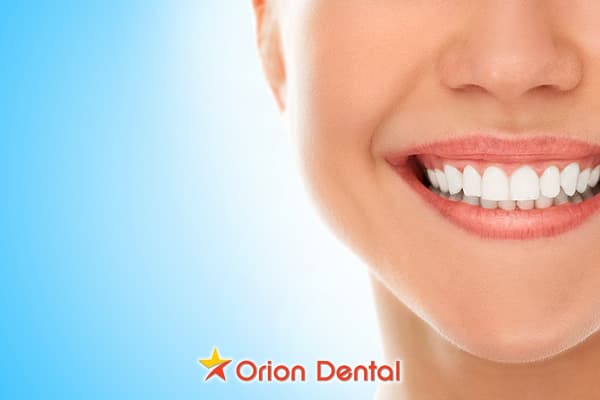
If you've considered whitening your teeth, you've likely wondered: is it actually safe?It's a reasonable question. After all, these treatments use bleaching agents on your teeth, and the internet is full of conflicting claims about sensitivity, enamel damage, and long-term effects.
The short answer is that teeth whitening is safe when performed properly — whether in a dental office or at home with dentist-supervised products. It has been in widespread clinical use for decades. At Orion Dental in Scarborough and Milton, we offer professional teeth whitening that is both effective and gentle. Here's a detailed look at what the science says.
30+ yr
of clinical whitening research
45 min
typical in-office session
Varies
shade change by person
24–72 hr
sensitivity duration
How Teeth Whitening Actually Works
To understand whitening safety, it helps to know what's happening at the tooth level. Your tooth enamel is porous — it contains millions of microscopic tubules that allow substances to penetrate beneath the surface. When you consume dark-coloured foods and beverages like coffee, tea, red wine, or berries, pigment molecules (chromogens) settle into these pores and cause staining over time.
Whitening products use peroxide-based bleaching agents — typically hydrogen peroxide or carbamide peroxide — to address these stains. The peroxide penetrates the enamel and triggers an oxidation reaction that breaks down the chromogen molecules into smaller, less visible compounds. The result is a lighter, brighter tooth colour.
How Whitening Removes Stains
Stain Accumulation
Pigment molecules from food, drink, and tobacco settle into the porous enamel surface over time.
Peroxide Application
A hydrogen or carbamide peroxide gel is applied to the tooth surface, either in-office or via a custom tray.
Oxidation Reaction
The peroxide penetrates enamel and breaks down stain molecules through a chemical oxidation process.
Brighter Result
Stain compounds are broken into smaller, colourless particles. Teeth appear noticeably lighter.
What the Research Says About Safety
Teeth whitening has been in widespread clinical use for over three decades. Whitening products approved for sale in Canada are considered safe when they are used as directed and, ideally, with guidance from your dentist.
Points worth understanding include:
Enamel Integrity
Properly formulated whitening products are not expected to structurally damage enamel when they are used as directed. The surface remains intact after treatment.
Gum Safety
Professional whitening uses protective barriers to shield gum tissue. Temporary irritation can occur with OTC products if gel contacts gums, but it resolves quickly.
Pulp Health
The peroxide concentration in approved whitening products does not reach levels that could harm the dental pulp (nerve). Sensitivity is a surface-level response, not a sign of damage.
Long-Term Effects
Periodic professional whitening has a long track record of clinical use. Your dentist can advise how often whitening is reasonable in your case.
The Bottom Line
Teeth whitening is considered safe when it is carried out properly, though sensitivity and gum irritation can occur. A dental assessment first helps confirm whether whitening is appropriate for you.
Common Side Effects (and Why They're Temporary)
While whitening is safe, it's not entirely without side effects. The most common is temporary tooth sensitivity. Understanding why this happens can put your mind at ease.
During the whitening process, the peroxide gel temporarily dehydrates the teeth. This dehydration makes the microscopic tubules in the dentin layer more exposed, allowing temperature changes to stimulate the nerve more easily. The sensation is similar to the brief zing you might feel when eating ice cream — and it resolves on its own as the teeth rehydrate, typically within 24 to 72 hours.
Managing Post-Whitening Sensitivity
- Use a desensitising toothpaste (containing potassium nitrate) for a week before and after treatment
- Avoid very hot or very cold foods and beverages for 24 to 48 hours after whitening
- Choose a professional treatment — your dentist can adjust the concentration and exposure time
- Apply fluoride gel after whitening to help remineralise and protect the enamel surface
- Space out whitening sessions to give your teeth adequate recovery time
Gum irritation is the other potential side effect, most often caused by whitening gel leaking from ill-fitting OTC trays. Professional whitening avoids this by using custom-moulded trays and protective gum barriers during in-office treatments.
Whiten Safely With Professional Care
Our team ensures your whitening treatment is comfortable, effective, and tailored to your needs.
Professional vs. At-Home: Which Is Safer?
Both professional and at-home whitening can be safe — but they offer different levels of control and supervision. Here's how they compare:
| Factor | In-Office Whitening | Dentist Take-Home Trays | OTC Products |
|---|---|---|---|
| Peroxide Concentration | High | Moderate | Low |
| Custom Fit | Yes (professional application) | Yes (custom trays) | No (generic) |
| Gum Protection | Barrier applied by dentist | Custom tray minimises contact | No protection |
| Supervised | Yes — dentist monitors | Yes — dentist prescribes | No |
| Sensitivity Risk | Low (managed) | Low (adjusted dosage) | Moderate (overuse possible) |
| Results | Visible after one appointment | Gradual over 1–2 weeks | Gradual over 2–4 weeks |
The safest approach is always professional supervision. Your dentist evaluates your oral health before treatment, selects the appropriate concentration, and monitors for any issues. This is especially important if you have existing dental restorations, sensitive teeth, or gum concerns.
Who Should Avoid or Delay Whitening?
While whitening is safe for most adults, certain situations call for caution:
When to Postpone Whitening
- Untreated cavities or active tooth decay
- Severe gum disease or gum recession with exposed roots
- Pregnancy or breastfeeding (precautionary recommendation)
- Children under 16 (pulp chamber is still developing)
- Known allergy to peroxide-based products
- Extremely sensitive teeth that have not been evaluated by a dentist
It's also worth noting that whitening does not change the colour of dental restorations — crowns, fillings, and veneers will not lighten with bleaching. If you have visible restorations on your front teeth, your dentist may recommend whitening first and then replacing the restorations to match your new shade.
A Pre-Whitening Checkup Is Key
The best way to ensure safe whitening is to start with a dental examination. Your dentist will check for cavities, gum health, and existing restorations before recommending the most appropriate whitening approach.
Whiten With Confidence
Teeth whitening has a strong safety record built over decades of clinical use. The key to a good experience is choosing the right method for your situation and, whenever possible, working with a dental professional who can guide the process. At Orion Dental, we take the time to evaluate your oral health, discuss your whitening goals, and recommend a treatment plan that suits your teeth.
Ready to brighten your smile safely? Book a consultation at our Scarborough or Milton office. Book an appointment or call 416-291-0306 (Scarborough) / 905-636-9770 (Milton).
Frequently Asked Questions
Common questions about teeth whitening safety
Is professional teeth whitening safe for enamel?
Yes. When performed by a dental professional using approved products, teeth whitening does not damage enamel. The peroxide gel penetrates the enamel to break down stain molecules without altering the tooth structure itself.
Why do my teeth feel sensitive after whitening?
Whitening temporarily dehydrates the teeth, which can expose microscopic tubules in the dentin layer. This causes short-lived sensitivity that typically resolves within 24 to 72 hours. Desensitising toothpaste can help.
Can I whiten my teeth if I have cavities?
It is best to treat any cavities or active decay before whitening. Peroxide gel can enter a cavity and irritate the nerve, causing pain. Your dentist will check for cavities during your pre-whitening examination.
Is it safe to whiten teeth during pregnancy?
Most dental professionals recommend postponing elective whitening during pregnancy and breastfeeding as a precaution. While there is no strong evidence of harm, the conservative approach is to wait.
How often can I safely whiten my teeth?
Professional in-office whitening is typically recommended once or twice a year. Take-home trays can be used for touch-ups every few months. Overuse of any whitening product can increase sensitivity and irritate gums.
Are LED whitening devices safe?
LED lights used in professional whitening (such as Philips Zoom) are safe when used as directed by a dental professional. Consumer LED devices sold over the counter are generally lower-powered but should still be used according to instructions.
Related Articles
Continue reading about teeth whitening
Types of Teeth Whitening Treatments Explained
A comprehensive guide to every whitening option — from strips to professional in-office systems.
Read moreOTC Teeth Whitening: Do They Actually Work?
How drugstore whitening products compare to professional treatments.
Read moreDaily Teeth Whitening Tips That Work
Simple habits to maintain a brighter smile between whitening treatments.
Read more