
11 Benefits of Dental Implants — and the Trade-Offs
A dental implant is a small titanium post placed surgically into the jawbone, where it acts as an artificial tooth root. Once the bone has fused to the post, a custom crown, bridge or denture is attached to it to restore chewing and appearance. Because the post carries chewing force into the bone, an implant can help limit the bone loss that follows a missing tooth, and unlike a bridge it requires no filing down of the neighbouring teeth. An implant is not the right answer for everyone, though — it involves surgery, months of healing, healthy gums, enough bone, and it can fail.

Orion Dental Team
Led by Dr. Fahimay Naqvi
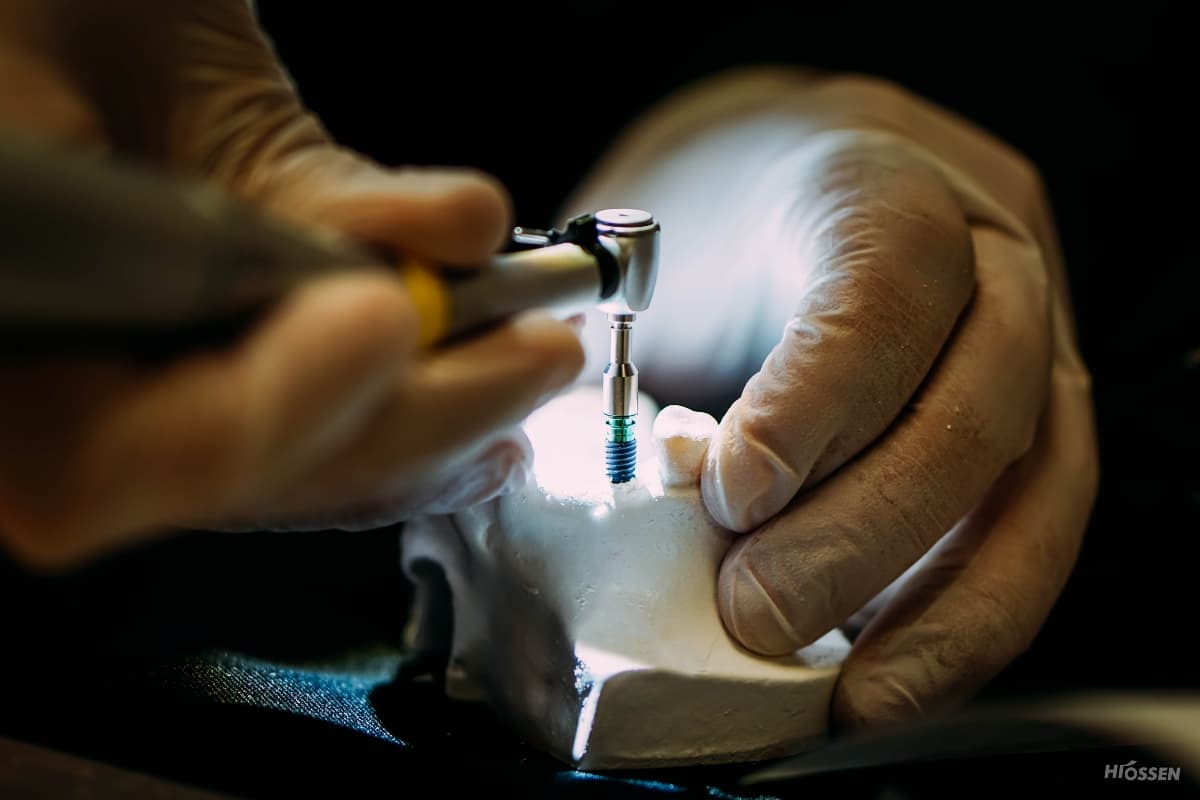
Dental implants are now among the common ways to replace a missing tooth. The implant is a titanium post placed into the jawbone, where it serves as an artificial root. Once bone grows onto and around it — a process called osseointegration — a crown, bridge or denture is fitted to it so the tooth works and looks close to the one you lost.
This article sets out the benefits people most often gain from implants. It also sets out what an implant asks of you in return: a surgical procedure, months of healing, a consistent hygiene routine, and a cost that is usually higher at the outset than a bridge or a denture. At Orion Dental in Scarborough and Milton we provide dental implants and implant restorations, and every consultation starts with the same question — whether an implant is the right choice for your situation. Sometimes it is not, and we will say so.
Titanium
the post is a biocompatible metal
Surgical
placement is a minor oral surgery
Months
treatment span, not weeks
Assessed
suitability depends on a clinical exam
The 11 Benefits, Explained
Here is the short version, followed by what each one actually means in practice.
- It replaces the root of the tooth, not only the visible part
- It may help slow the bone loss that follows a missing tooth
- It is designed to restore chewing function closer to a natural tooth
- The neighbouring teeth are left untouched
- It is fixed in place, so nothing shifts while you eat or speak
- No adhesives, no soaking, no nightly removal
- The restoration itself cannot develop a cavity
- It can support one tooth, several teeth, or a full arch
- It may help maintain facial shape where a tooth has been lost
- Daily care is the same routine you already follow
- Many people find it restores confidence in eating and smiling
1. It replaces the root of the tooth, not only the visible part
A bridge or a denture replaces what you can see. An implant is the only common option that also replaces what sits below the gum. That matters because the root is what anchors a tooth and what keeps the surrounding bone busy. Rebuilding the root is also what makes the rest of the benefits on this list possible — and it is why the treatment involves surgery, which the alternatives do not.
2. It may help slow the bone loss that follows a missing tooth
When a tooth comes out, the bone that held it is no longer being loaded, and it begins to shrink — a process called resorption. An implant transmits chewing force into the jaw, which can help maintain bone in that area. It does not restore bone that has already gone, and it does not stop bone loss elsewhere in the mouth, so it is a way of protecting what you still have rather than turning the clock back.
Why bone matters to the decision
Bone loss after an extraction is fastest in the first months and continues gradually afterwards. That is why the amount of bone available is one of the first things your dentist measures, and why a tooth missing for many years may need grafting before an implant is possible. Waiting is not neutral — it can narrow the options later.
3. It is designed to restore chewing function closer to a natural tooth
Because the post is anchored in bone rather than resting on gum, an implant can carry more bite force than a removable denture. Many people find they can return to foods that had become awkward, such as raw vegetables, crusty bread and nuts. How much function you regain depends on the site, the opposing teeth and your bite, so your dentist will set realistic expectations for your case rather than a general promise.
4. The neighbouring teeth are left untouched
A conventional dental bridge is held by the teeth on either side of the gap, and those teeth have to be filed down to take it. If they are healthy and untouched, that is a real cost. An implant stands on its own, so sound teeth stay sound. Where the neighbouring teeth already need crowns for other reasons, a bridge may make more sense — which is exactly the sort of trade-off worth discussing before you choose.
5. It is fixed in place, so nothing shifts while you eat or speak
Removable dentures can move, click or drop at inconvenient moments, and an ill-fitting denture can blur certain sounds. An implant-supported tooth does not move, which many patients say removes a background worry they had stopped noticing. Implants can also be used to stabilise an existing denture, so this benefit is available without replacing every tooth individually.
6. No adhesives, no soaking, no nightly removal
An implant restoration stays in your mouth and is cleaned in place. There is no adhesive to buy, no overnight soaking, and no routine of taking something out in front of other people. For patients who have lived with a removable denture or partial, this is often the change they mention first.
7. The restoration itself cannot develop a cavity
Implant crowns are made from porcelain or zirconia, and the post is titanium. None of those materials decay. This is a genuine benefit, but it is also the most commonly misread one — the gum and bone around an implant can still become infected. That condition is called peri-implantitis, it behaves much like gum disease around a natural tooth, and it is one of the main reasons implants are lost years after placement.
8. It can support one tooth, several teeth, or a full arch
A single implant replaces a single tooth. Two implants can carry a bridge across a longer gap, and a small number of implants can secure a full denture that would otherwise rest on the gums. This flexibility means the number of implants is a clinical decision about support and bone, not a one-implant-per-tooth rule.
Wondering whether an implant fits your situation?
A consultation covers the options, the trade-offs and what your case would involve — with no obligation to proceed.
9. It may help maintain facial shape where a tooth has been lost
Extensive bone loss in the jaw can change the way the lower face is supported, and people who have lost many teeth sometimes notice the effect around the mouth and cheeks. By helping to maintain bone at the implant site, an implant can support facial structure in that area. This is a modest, localised effect, not a cosmetic treatment for facial ageing.
10. Daily care is the same routine you already follow
Brushing twice a day, cleaning between the teeth once a day, and keeping your regular hygiene appointments is the whole routine. Your dental team may suggest a particular interdental brush or a water flosser for the shape of your restoration. The routine is familiar — but it is not optional, and that is worth being honest about before treatment rather than after.
11. Many people find it restores confidence in eating and smiling
A missing tooth can quietly change how someone eats in company, how readily they smile in photographs, and how comfortable they feel speaking up. Patients frequently tell us that having the gap closed made a difference out of proportion to the size of the tooth. It is a subjective benefit, and it varies from person to person — but it is one of the reasons people go ahead.
What to Weigh Before You Decide
A list of benefits on its own is not a basis for a decision. Every advantage above comes attached to something you should know, and the honest version of this article puts them side by side.
Each benefit, with the caveat that belongs beside it
| The benefit | The caveat worth knowing |
|---|---|
| Replaces the tooth root | Requires oral surgery and a healing period measured in months, not days |
| Helps limit bone loss | Needs enough bone to start with; grafting adds another procedure, cost and healing time |
| Cannot decay | The gum and bone around it can still become infected if plaque is left at the gum line |
| Fixed in place | It is not simply lifted out if something goes wrong — removal and replacement is a further procedure |
| Intended as a long-term option | The crown wears with use and may need replacing at some point, even when the post is sound |
| Leaves neighbouring teeth intact | Usually costs more at the outset than a bridge or a denture |
What an implant asks of you
- A surgical procedure, normally under local anaesthetic, with soreness and swelling afterwards
- A treatment span measured in months, because the bone needs time to fuse to the post
- Healthy gums before treatment begins — active gum disease is treated first
- Daily cleaning around the implant, and regular professional cleanings for as long as you have it
- A higher cost at the outset than the alternatives in most cases
- Possible additional procedures, such as bone grafting or a sinus lift
- Acceptance that an implant can fail, early or years later, and that no dentist can rule that out
Implants, Bridges and Dentures Compared
There are three common ways to replace a missing tooth, and a fourth option — leaving the space — which is occasionally reasonable. Each has a different profile. The table below is a starting point for a conversation, not a scoreboard.
Three ways to replace a missing tooth
| Consideration | Dental implant | Fixed bridge | Removable denture |
|---|---|---|---|
| Replaces the tooth root | Yes | No | No |
| Surgery required | Yes | No | No |
| Neighbouring teeth altered | No | Yes — filed down to carry the bridge | No |
| Typical treatment span | Usually several months | Usually a few weeks | Usually a few weeks |
| Cost at the outset | Usually the highest of the three | Moderate | Usually the lowest |
| Cleaning | Cleaned in place, plus cleaning between the teeth | Cleaned in place, floss threader or interdental brush needed | Removed and cleaned daily |
| Can decay | The restoration cannot decay, but the gum and bone around it can become infected | Yes — the supporting teeth can decay beneath the bridge | No, though the gums underneath can become sore or inflamed |
| Effect on jawbone | Carries chewing force into the bone | No effect on bone at the gap | No effect on bone at the gap |
| If it fails | Removal, healing, and possibly a new implant later | Remade; the supporting teeth may be compromised | Relined or remade |
| Main limitation | Needs adequate bone and healthy gums | Needs sound teeth on both sides of the gap | Least stable of the three when chewing |
For a longer look at how implants and bridges compare in practice, see implants instead of bridges.
Who Implants May Suit — and Who They May Not
Suitability is a clinical judgement, not a checklist you can complete at home. The two lists below describe the factors your dentist weighs. Nothing here is a diagnosis, and none of it rules you in or out on its own — several of the items in the second list are situations to manage first rather than reasons to abandon the idea.
Implants may suit you if
- You have lost one or more teeth and have finished growing
- You have enough jawbone to hold an implant, or are open to considering grafting
- Your gums are healthy, or your gum disease has been treated and is stable
- You are in reasonable general health, with any chronic conditions well managed
- You already keep a consistent brushing and cleaning routine, or are ready to build one
- You are comfortable with treatment that runs over months rather than weeks
Your dentist will look closely before recommending an implant if
- Your diabetes is not well controlled — healing is slower and infection risk is higher, so your dentist and physician will want your blood sugar managed first
- You have active gum disease — this is treated and brought under control before an implant is considered
- You smoke heavily — smoking restricts blood flow to the gums and raises the risk of failure; your dentist will discuss this with you directly
- There is not enough bone height or width — grafting may make an implant possible, but it is a further procedure and is not suitable in every case
- You take bone-density medication such as bisphosphonate or antiresorptive therapy — your dentist will review your medical history and may consult the physician who prescribed it
- You are still growing — in children and teenagers the jaw is still changing, so implant treatment is usually deferred
- You have had radiation therapy to the jaw — healing can be affected, and your dentist will want details from your medical team
- You grind or clench your teeth — the load can overstress an implant, so this is usually managed first, often with a night guard
If grinding is part of the picture, our page on bruxism and night guards explains how it is usually managed. If gum health is the obstacle, periodontal therapy is generally the first step. Neither closes the door on implants — they change the order of the plan.
How suitability is assessed at a consultation
Medical history review
Conditions, medications and past treatment that could affect healing
Clinical examination
The gap itself, the neighbouring teeth, your bite and the health of your gums
Imaging
Digital X-rays, and 3D imaging where more detail on bone volume is needed
Discussion of the options
Implant, bridge, denture or leaving the space — with the trade-offs of each and the fees involved
A plan, or a referral
Some cases are better handled by a dental specialist such as an oral and maxillofacial surgeon or a periodontist, and we will tell you when that is the case
Risks and Complications
Implant placement is a surgical procedure, and every surgical procedure carries risk. Complications are uncommon and most are manageable when they are caught early, but you are entitled to know what they are before you agree to treatment.
- Infection at the surgical site. Usually early, and usually treatable, but it can interfere with healing.
- Failure to integrate. Sometimes the bone does not fuse to the post. This tends to show up in the first months, and the implant is removed.
- Peri-implantitis. Inflammation and bone loss around an implant that has been in place for years, driven by plaque, and the main cause of late failure.
- Nerve injury. Uncommon, and more of a consideration in the lower jaw. It can cause tingling, numbness or altered sensation in the lip, chin or tongue, which is usually temporary but occasionally persists. Careful imaging and planning is how this risk is reduced.
- Sinus involvement. Upper back implants sit close to the sinus, which is why a sinus lift is sometimes planned in advance.
- Damage to a neighbouring tooth or root during placement. Rare, and again a matter of planning and imaging.
- Mechanical problems. A screw can loosen, and a crown can chip or fracture. These are usually repairable without disturbing the implant.
- Aesthetic disappointment. Gum can recede over time and expose the margin of the restoration, which is more noticeable at the front of the mouth.
- A graft that does not take. Where bone grafting is part of the plan, the graft itself may not integrate, which delays or changes the treatment.
What failure actually looks like
Early failure usually means the implant never becomes firm, is removed, and the site is left to heal — often with the possibility of trying again later. Late failure usually follows gum and bone infection around an implant that had been working well for years. Neither outcome is common, but both are real, and no dentist can promise you an implant will succeed. What we can do is assess carefully, plan around the risks we can see, and monitor it afterwards. Our article on whether dental implants are safe goes further into the safety record.
What to Expect, Stage by Stage
Implant treatment is a sequence of appointments spread across months, with most of that time spent waiting for bone to heal rather than sitting in a chair.
Assessment
Exam, imaging, options
Preparation
Extraction or grafting, if needed
Placement
The post is placed
Healing
Bone fuses to the post
Restoration
Crown fitted and adjusted
A realistic timeline for a single implant
| Stage | What happens | Typical timeframe |
|---|---|---|
| Consultation and planning | Medical history, clinical exam, imaging, and a discussion of the options and the fees | One or two visits |
| Preparatory treatment, if needed | Removing a failing tooth, treating the gums, bone grafting or a sinus lift | Varies widely; grafting commonly adds several months of healing |
| Implant placement | The post is placed into the bone, normally under local anaesthetic | Commonly around one to two hours for a single implant |
| Initial healing | Swelling and soreness settle; a softer diet and careful cleaning around the site | Commonly the first one to two weeks |
| Osseointegration | Bone fuses to the surface of the post | Commonly three to six months, and longer in some cases |
| Abutment and impressions | A connector is fitted and the restoration is made to match your teeth | A few weeks |
| Fitting the restoration | The crown, bridge or denture is fitted and the bite is adjusted | One or two visits |
| Ongoing reviews | Checking that the gum and bone around the implant stay healthy | At your regular checkups, indefinitely |
Placement is normally carried out under local anaesthetic, so the area is numb while the work is done. If dental treatment makes you anxious, ask us about sedation options at the planning stage rather than on the day. Afterwards, most people report soreness, swelling and sometimes bruising around the site for several days. A temporary restoration can often be worn during the healing months so you are not left with a visible gap. Your dentist will give you specific aftercare instructions and a number to call if something does not feel right.
Cost and Coverage
Implant fees vary with the number of implants, whether grafting is needed, the materials used, and whether any preparatory treatment is required first, so a figure quoted for someone else tells you very little about your own case. We set out the fees for your treatment plan in writing at the consultation, before anything is booked.
Coverage differs between plans: some contribute towards implant treatment, some cover the restoration but not the surgical placement, and some exclude implants entirely. Our team can submit a predetermination so you know your plan's position before you commit. See insurance and payment for how we handle claims, and the Canadian Dental Care Plan page if you are covered under that programme.
Aftercare: Helping an Implant Last
Most of what determines how long an implant serves you happens after the treatment is finished. The habits below are what your dental team will ask you to keep up.
Day-to-day and long-term care
- Brush twice a day, angling the brush along the gum line around the implant
- Clean between the implant and the neighbouring teeth once a day, with floss, an interdental brush or a water flosser
- Keep your professional cleaning and checkup appointments — the gum around an implant is checked at every visit
- Tell your dentist if the area bleeds, feels tender, or if the tooth ever feels loose
- Wear a night guard if grinding has been identified, so the implant is not overloaded
- Avoid using the implant to bite hard objects such as ice, pens or packaging
- If you smoke, treat quitting as part of the treatment plan rather than a separate resolution
The single most useful habit is turning up for reviews. Bone loss around an implant often causes no discomfort in its early stages, which means the person most likely to notice it first is your dentist or hygienist, not you.
Deciding Whether Implants Are Right for You
An implant is a considered decision rather than an urgent one. For many people with a missing tooth it is a sound choice; for others a bridge, a partial denture, or treatment to save the natural tooth is the more sensible route, and that is worth hearing before rather than after. Our article on how implants fill in missing teeth covers the practical side, and root canal therapy is worth reading if the tooth in question is still in place.
A consultation is a conversation, not a commitment. We will examine the site, take the imaging needed to see the bone, go through your medical history, and set out the realistic options with their trade-offs and fees. If an implant is not appropriate for you, we will say so and explain why. If it is, we will walk you through what the process involves before you decide. You can also read what to expect at a first visit beforehand.
To arrange a dental implant consultation, visit our Scarborough or Milton office. Book an appointment or call 416-291-0306 (Scarborough) / 905-636-9770 (Milton).
Frequently Asked Questions
Including the questions people are least comfortable asking
Can a dental implant fail?
Yes. An implant can fail early, if the bone does not fuse to the post during healing, or years later, if the bone and gum around it become infected or the implant is overloaded. Failure is uncommon, but it is a real possibility and no dentist can rule it out. If an implant does fail, it is usually removed, the site is allowed to heal, and a replacement may be possible later depending on how much bone remains.
Does getting a dental implant hurt?
The placement itself is carried out under local anaesthetic, so the area is numb while the work is done. Sedation options are available if you find dental treatment stressful. Afterwards, most people describe soreness, swelling and bruising around the site for several days rather than severe pain, and your dentist will advise you on managing it. Everyone experiences discomfort differently, so we will talk through what to expect before you decide.
Am I too old for dental implants?
There is no upper age limit for dental implants. What matters is your general health, your ability to heal, the condition of your gums and how much jawbone you have, not the number of years. Older adults have implants placed routinely. Your dentist will review your medical history and any medications with you, and may consult your physician, before recommending treatment.
What if I do not have enough bone in my jaw?
Bone is lost from the jaw after a tooth is removed, and if a tooth has been missing for a long time there may not be enough left to hold an implant. Bone grafting or a sinus lift can rebuild the site in many cases, but each is a further procedure that adds cost and several months of healing, and neither is suitable for everyone. Your dentist will use imaging to measure the bone you have and explain honestly whether an implant is realistic.
Will my insurance cover dental implants?
Coverage varies widely between plans. Some plans contribute towards part of implant treatment, some cover the crown but not the surgical placement, and some exclude implants altogether. Our team can help you submit a predetermination to your insurer so you know what your plan will pay before you commit to treatment. We discuss fees openly at your consultation.
How long do dental implants last?
Implants are intended as a long-term replacement and many stay in place for decades, but longevity varies from person to person and cannot be promised. The titanium post is the part designed to last; the crown attached to it wears with use and may need replacing at some point even when the post is still sound. Oral hygiene, gum health, smoking, grinding and general health all influence how long an implant serves you.
Can I have an implant if I smoke?
Smoking restricts blood flow to the gums and impairs healing, which raises the risk of an implant failing to integrate or becoming infected later. Smoking does not automatically rule out treatment, but many dentists recommend stopping before placement and through the healing period. Your dentist will discuss the added risk with you directly so you can make an informed decision.
Can I have an implant if I have gum disease?
Active gum disease is treated and brought under control before an implant is considered. The same bacteria that damage the bone around natural teeth can affect the bone around an implant, a condition called peri-implantitis. Once your gums are stable and you have a hygiene routine that maintains them, an implant may become an option. Your dentist will assess your gum health as part of the consultation.
How long does the whole implant process take?
Most single-tooth implant treatment runs over several months rather than weeks. After placement, the bone commonly needs three to six months to fuse to the post before the final restoration is fitted, and longer in some cases. If a tooth needs removing first, or if bone grafting is required, add further healing time. Your dentist will map out a timeline for your specific case at the planning stage.
How do I clean around a dental implant?
Brush twice daily and clean between the implant and the neighbouring teeth once a day, using floss, an interdental brush or a water flosser as your dental team recommends. The restoration cannot decay, but plaque left at the gum line can inflame the gum and, over time, the bone that holds the implant. Regular professional cleanings and checkups let us spot early changes while they are still straightforward to manage.
Related Articles
Continue reading about tooth replacement options
Are Dental Implants Safe? What You Need to Know
Learn about the safety profile of dental implants, potential risks, and what to expect from the procedure.
Read moreWhat Is a Root Canal? A Complete Guide
When a tooth can be saved, root canal therapy may be the right approach before considering extraction.
Read moreUnderstanding the 4 Stages of Gum Disease
Healthy gums are essential for implant success. Learn how to recognise and manage gum disease.
Read more