
4.64 out of 5 · 295 Google reviews
4.64 / 5 · Google
295 reviews across Milton & Scarborough.
Types of Bite Problems Explained
A bite problem, clinically called a malocclusion, is a misalignment in the way your upper and lower teeth meet. In an ideal bite the upper teeth sit about one to two millimetres in front of the lower teeth and the molar cusps fit into the opposing grooves; common departures include underbite, overbite, crossbite, crowding and open bite. Left untreated, some of these lead to uneven enamel wear, jaw asymmetry and TMJ dysfunction, so a bite assessment is worthwhile.

Orion Dental Team
Led by Dr. Fahimay Naqvi
In an ideal bite, your upper teeth sit slightly in front of your lower teeth — by about one to two millimetres — and the cusps (pointed tips) of your molars fit neatly into the grooves of the opposing molars. When this alignment is off, the result is a malocclusion — a clinical term for a bite problem.
Bite issues are surprisingly common. They can be inherited, develop during childhood, or result from habits like thumb-sucking or prolonged pacifier use. At Orion Dental in Scarborough and Milton, we diagnose and treat bite problems using orthodontic treatment, Invisalign, and other approaches tailored to each patient.
1–2 mm
ideal overbite
Common
some degree of malocclusion
Age 7
recommended first assessment
12–24 mo
typical treatment duration
What Does an Ideal Bite Look Like?
Before discussing what can go wrong, it helps to understand what a healthy bite looks like. In a properly aligned bite:
Signs of a Healthy Bite
- Upper front teeth overlap the lower front teeth by 1–2 mm
- Molars interlock — the cusps of upper molars fit into the grooves of lower molars
- The midline of the upper and lower teeth aligns with the centre of the face
- Teeth are evenly spaced with no significant crowding or gaps
- The jaw opens and closes smoothly without clicking, popping, or pain
- Chewing feels balanced on both sides
Underbite (Class III Malocclusion)
An underbite — clinically known as prognathism — occurs when the lower teeth and jaw extend in front of the upper teeth. This can range from a mild misalignment to a pronounced protrusion of the lower jaw. Underbites are often present from birth due to skeletal development of the jaw.
Effects of an Untreated Underbite
- Difficulty chewing food properly
- Speech difficulties, particularly with certain sounds
- Accelerated enamel wear on both upper and lower teeth
- TMJ pain, headaches, and chronic jaw discomfort
- Changes in facial profile and appearance over time
Overbite (Deep Bite)
An overbite occurs when the upper front teeth overlap the lower front teeth excessively — sometimes by as much as 8 to 10 mm, compared to the ideal 1–2 mm. It can result from genetic jaw structure, childhood habits (thumb-sucking, prolonged pacifier use), or uneven jaw growth.
In severe cases, the lower teeth may bite into the roof of the mouth, causing tissue irritation. An overbite can also create a recessed chin appearance, affecting facial aesthetics and self-confidence.
Crossbite
A crossbite is a combination condition where the alignment varies at different points along the arch. Typically, the upper front teeth sit correctly in front of the lower teeth, but around the sides or back of the jaw, the upper teeth actually sit inside the lower teeth. This reversed positioning puts uneven stress on the teeth and jaw.
Crossbites can be anterior (front teeth), posterior (back teeth), or both. Left untreated, they lead to excessive enamel wear, jaw asymmetry, and TMJ dysfunction. Early treatment during childhood is particularly effective because the jaw is still developing.
Crowding
Crowding occurs when there is not enough space in the jaw for all the teeth to fit properly. Teeth overlap, twist, or are pushed in front of or behind adjacent teeth. This is the most common bite problem and can range from mild to severe.
Why Crowding Matters
- Overlapping teeth trap food and plaque, increasing cavity and gum disease risk
- Proper brushing and flossing become significantly harder
- Uneven pressure distribution can lead to premature wear on certain teeth
- May worsen over time, especially when wisdom teeth erupt
- Can affect speech clarity and chewing efficiency
Open Bite
An open bite means the upper and lower front teeth do not touch when the mouth is closed, leaving a visible gap. This makes biting into foods like sandwiches or apples difficult and can affect speech. Open bites are often linked to prolonged thumb-sucking, tongue-thrusting habits, or skeletal development patterns.
Bite Problems at a Glance
| Bite Problem | What It Looks Like | Common Causes | Main Risks |
|---|---|---|---|
| Underbite | Lower teeth in front of upper | Genetics, jaw growth | Enamel wear, TMJ pain, speech issues |
| Overbite | Upper teeth excessively overlap lower | Genetics, thumb-sucking | Tissue irritation, facial changes |
| Crossbite | Upper teeth sit inside lower (sides/back) | Jaw width mismatch | Uneven wear, jaw asymmetry |
| Crowding | Teeth overlap or twist | Small jaw, extra teeth | Cavities, gum disease, plaque buildup |
| Open bite | Front teeth do not meet when closed | Thumb-sucking, tongue thrust | Difficulty biting, speech changes |
Concerned About Your Bite?
A thorough bite assessment identifies the issue and the best path forward — for adults and children alike.
How Bite Problems Are Treated
Treatment depends on the type and severity of the malocclusion, the patient's age, and their overall dental health. Here are the most common approaches:
The Orthodontic Treatment Process
Assessment & Diagnosis
Digital X-rays, bite analysis, and clinical examination to identify the type and severity of the bite problem.
Treatment Planning
Your dentist creates a personalised plan — which may include braces, Invisalign, appliances, or a combination approach.
Active Treatment
Gradual tooth movement and/or jaw repositioning over 12–24 months (varies by severity and method).
Retention Phase
Retainers maintain the corrected alignment. This phase is critical to preventing relapse.
Traditional Braces
Metal or ceramic brackets bonded to teeth, connected by wires. Highly effective for all types of malocclusion, including severe cases.
Invisalign Clear Aligners
Custom-made, removable trays that gradually shift teeth. Ideal for mild to moderate bite problems with the advantage of being nearly invisible.
Palatal Expanders
Used in growing children to widen the upper jaw and correct crossbites. Typically used before the palatal suture fuses (around age 14–16).
Retainers
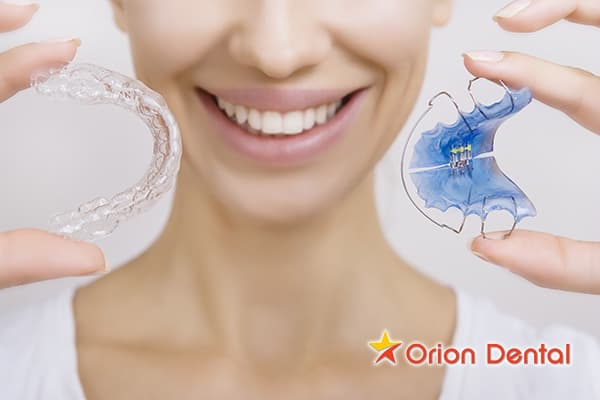
Worn after active treatment to maintain alignment. May be fixed (bonded behind teeth) or removable, depending on the case.
Adults Can Benefit Too
Orthodontic treatment is not just for teenagers. Adult orthodontics has become increasingly common, and options like Invisalign make it possible to correct bite problems discreetly at any age.
Get Your Bite Assessed
Whether you have noticed crowding, jaw pain, or uneven wear on your teeth, a bite assessment is the first step toward a solution. Our team at Orion Dental offers orthodontic treatment, Invisalign, and night guards for patients of all ages.
Schedule an evaluation at our Scarborough or Milton office. Book an appointment or call 416-291-0306 (Scarborough) / 905-636-9770 (Milton).
Frequently Asked Questions
Common questions about bite problems and treatment
What is a malocclusion?
Malocclusion is the clinical term for a misaligned bite — when your upper and lower teeth do not fit together properly. Common types include overbite, underbite, crossbite, open bite, and crowding.
Can bite problems cause headaches?
Yes. A misaligned bite places uneven stress on your jaw muscles and temporomandibular joint (TMJ), which can lead to chronic headaches, jaw pain, ear pain, and neck tension.
At what age should bite problems be assessed?
The Canadian Association of Orthodontists recommends an orthodontic evaluation by age 7. However, bite problems can be treated at any age — adult orthodontics has become increasingly common and effective.
Can Invisalign fix bite problems?
Invisalign can correct many bite issues including mild to moderate overbites, underbites, crossbites, and crowding. Severe cases may require traditional braces or a combination approach. Your dentist will advise on the best option.
What happens if a bite problem is left untreated?
Untreated malocclusion can lead to uneven tooth wear, increased risk of cavities and gum disease, TMJ disorders, difficulty chewing, speech problems, and changes in facial appearance over time.
How long does orthodontic treatment take for bite correction?
Treatment duration depends on the severity of the bite problem and the method used. Most cases take 12 to 24 months with braces or Invisalign. Complex cases involving jaw repositioning may take longer.
Related Articles
Continue reading about dental health