
4.64 out of 5 · 295 Google reviews
4.64 / 5 · Google
295 reviews across Milton & Scarborough.
Foods That Don't Stain Your Teeth
Colourful foods stain teeth through three mechanisms: chromogens, the pigment molecules in berries, beets and turmeric; tannins, which help those pigments stick to enamel; and acids, which roughen the enamel surface so pigments settle into it. Dark berries, tomato-based sauces, curry, soy sauce, balsamic vinegar, coffee, tea and red wine are the usual culprits. Most food staining is extrinsic — on the surface — so professional cleaning can usually address it, and rinsing with water afterwards limits build-up.

Orion Dental Team
Led by Dr. Fahimay Naqvi
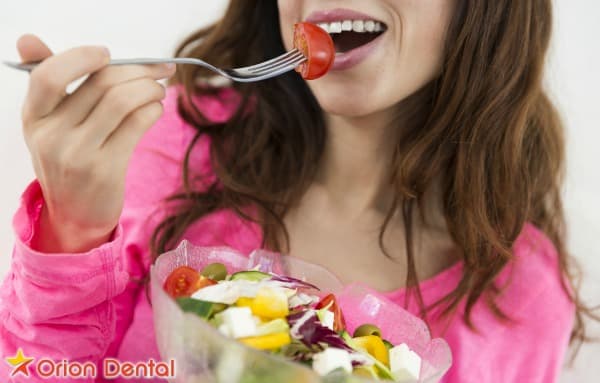
Nutritionists love to say “eat the rainbow” — and for good reason. Colourful fruits and vegetables are packed with vitamins, antioxidants, and fibre. But many of those deeply pigmented foods contain chromogens, compounds that bind to tooth enamel and cause staining over time.
At Orion Dental in Scarborough and Milton, we want you to enjoy a nutritious diet and a bright smile. This guide walks you through which foods are most likely to stain, which ones are safe, and simple strategies to minimise discolouration.
Most
stains sit on the surface
pH 5.5
acid threshold for enamel
6 mo
recommended cleaning interval
30 sec
water rinse after staining foods
How Tooth Staining Works
Tooth staining happens through three main mechanisms. Chromogens are intensely pigmented molecules found in foods like berries, coffee, and red wine. Tannins, found in tea and wine, help chromogens stick to enamel. And acids roughen the enamel surface, creating tiny grooves where pigments can settle in.
When all three factors combine — as they do in red wine, for example — staining happens more quickly and is harder to remove. The good news is that most food-related stains are extrinsic (on the surface), which means they can be addressed with professional cleaning and, if needed, whitening treatments.
How Food Stains Your Teeth
Chromogens
Pigmented compounds in food and drink contact the tooth surface.
Tannins
These compounds help chromogens adhere to enamel more effectively.
Acid Erosion
Acids roughen the enamel, creating micro-grooves that trap pigments.
Visible Staining
Over time, repeated exposure leads to noticeable discolouration.
Foods and Drinks That Stain Your Teeth
These are the most common staining culprits. You do not need to eliminate them — but being aware helps you take preventive steps when you enjoy them.
Dark Berries
Blueberries, blackberries, cranberries, pomegranates, cherries, and raspberries are nutritional powerhouses — but their deep pigments can discolour enamel whether eaten whole, juiced, or in jam form. The darker the berry, the greater the staining potential.
Sauces and Spices
Tomato-based pasta sauces combine acidity with deep colour, making them surprisingly effective at staining. Curry and turmeric leave yellow pigments that can build up over time. Soy sauce and balsamic vinegar are dark, sticky, and cling to tooth surfaces.
Beverages
Coffee and tea are the most common daily staining agents. Red wine combines chromogens, tannins, and acid for a potent staining effect. Even white wine, while not deeply pigmented itself, can make teeth more susceptible to staining from other foods by roughening the enamel surface with its acidity.
Surprising Stainers
Beetshave some of the strongest colour-staining power of any food. Artificial food colouring found in candy, ice pops, gelatin, and cake icing can also leave its mark — especially on children's teeth.
| Food / Drink | Staining Agent | Staining Level | Tip |
|---|---|---|---|
| Blueberries | Anthocyanins | High | Rinse with water after eating |
| Coffee | Chromogens + tannins | High | Drink water alongside |
| Red wine | Chromogens + tannins + acid | Very high | Eat cheese to buffer |
| Tomato sauce | Lycopene + acid | Moderate–high | Eat spinach or broccoli first |
| Turmeric / curry | Curcumin | Moderate | Rinse mouth promptly |
| Beets | Betalains | Very high | Pair with crunchy vegetables |
Want a Brighter Smile?
A professional cleaning removes surface stains and restores your natural brightness.
Foods That Are Safe for Your Smile
Plenty of nutritious, colourful foods are low in staining potential. Building your meals around these options gives you the nutritional variety you need without the worry:
White & Light Vegetables
Cauliflower, mushrooms, onions, and potatoes are stain-free and versatile in meals.
Crunchy Green Vegetables
Celery, cucumber, broccoli, and green beans actually help clean teeth as you chew.
Bananas & Light Fruits
Bananas, pears, peeled apples, and melons are nutrient-rich without strong pigments.
Lean Proteins
Chicken, fish, turkey, and eggs provide nutrition without any staining compounds.
Rice & Pasta (plain)
Light-coloured carbohydrates are stain-safe — it's the sauces that cause problems.
Dairy Products
Cheese, yogourt, and milk are not only stain-free but actively protect enamel.
How to Minimise Staining Without Giving Up Your Favourite Foods
You do not have to avoid berries, coffee, or curry altogether. These practical habits can significantly reduce staining:
Stain Prevention Habits
- Eat crunchy vegetables (celery, broccoli, carrots) before staining foods — they create a protective film on enamel
- Rinse your mouth with water immediately after consuming pigmented foods or drinks
- Drink staining beverages through a straw to minimise contact with front teeth
- Pair staining foods with cheese or milk — dairy proteins coat and protect enamel
- Wait 30 minutes after acidic foods before brushing to avoid damaging softened enamel
- Schedule regular professional cleanings every six months to remove built-up surface stains
The Salad Defence
Starting a meal with a fresh green salad — especially one dressed with a light vinaigrette — creates a natural barrier on your teeth. The crunchy greens stimulate saliva and the light oil from the dressing helps prevent pigments from adhering to enamel.
Professional Stain Removal and Whitening
Even with the best preventive habits, some staining is inevitable over the years. Regular professional cleanings remove surface stains and tartar that contribute to discolouration. For deeper or more stubborn staining, your dentist can discuss professional whitening options that are safe, effective, and tailored to your specific needs.
Over-the-counter whitening products can help with mild staining, but professional treatments deliver more consistent and noticeable results. Your dental team can recommend the best approach based on the type and severity of your staining.
Enjoy the Colour, Keep the Brightness
A vibrant diet and a bright smile are not mutually exclusive. By understanding which foods stain, using simple prevention strategies, and keeping up with your regular dental visits, you can enjoy the full spectrum of nutritious foods without sacrificing the appearance of your teeth.
Schedule a cleaning at our Scarborough or Milton office. Book an appointment or call 416-291-0306 (Scarborough) / 905-636-9770 (Milton).
Frequently Asked Questions
Common questions about food staining and your teeth
Which foods stain teeth the most?
Dark berries (blueberries, blackberries), red wine, coffee, tea, tomato-based sauces, balsamic vinegar, soy sauce, curry, beets, and foods with artificial colouring are among the biggest offenders for tooth staining.
Can you eat colourful foods without staining your teeth?
Yes. Eating crunchy vegetables before staining foods creates a protective film on enamel. Rinsing with water immediately after eating pigmented foods, and keeping up with regular dental cleanings, also helps minimise staining.
Does coffee stain teeth permanently?
Coffee stains are typically extrinsic, meaning they build up on the tooth surface over time. Professional dental cleanings can remove most surface staining. For deeper discolouration, professional whitening treatments are effective.
How do professional cleanings help with tooth staining?
During a professional cleaning, your dental hygienist removes plaque, tartar, and surface stains using specialised instruments and polishing paste. Regular cleanings every six months help prevent stain buildup.
Does whitening toothpaste actually work?
Whitening toothpastes contain mild abrasives that can remove some surface staining. However, they cannot change the natural colour of your teeth or address deeper discolouration. For more noticeable results, speak with your dentist about professional whitening.
Is it true that white wine stains teeth?
White wine itself does not contain strong pigments, but its acidity can roughen enamel and make teeth more susceptible to staining from other foods consumed at the same time or shortly after.
Related Articles
Continue reading about dental health
Acidic Foods and Your Teeth: What You Need to Know
Understand how acid erodes enamel and how to enjoy acidic foods safely.
Read more5 Everyday Foods That Are Good for Your Teeth
The everyday foods that actively strengthen your enamel and support oral health.
Read moreHow Drinking Water Helps Fight Bad Breath
Water does more than quench thirst — it helps keep your mouth clean and fresh.
Read more