
4.64 out of 5 · 295 Google reviews
4.64 / 5 · Google
295 reviews across Milton & Scarborough.
Manual vs Electric Toothbrushes: Which Is Better?
Both manual and electric toothbrushes can clean teeth effectively — the difference is how much technique each one asks of you. A manual brush averages about 300 strokes per minute and relies on you to hold a 45-degree angle for two full minutes, while electric models produce 3,000 to 30,000 strokes per minute and add a timer and pressure feedback. Neither type cleans between teeth, so daily flossing is still needed either way.

Orion Dental Team
Led by Dr. Fahimay Naqvi
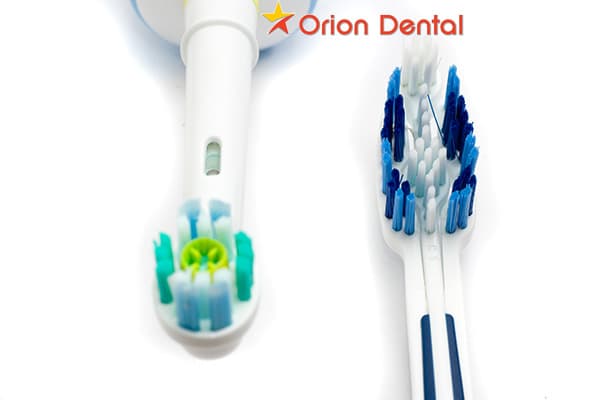
It is one of the most common questions patients ask during their appointments: “Should I switch to an electric toothbrush?” The short answer is that both manual and electric toothbrushes can clean your teeth effectively. The real difference lies in how easy each one makes it to achieve a thorough clean.
At Orion Dental in Scarborough and Milton, we believe the right toothbrush is the one you will use consistently and correctly. Let us break down the differences so you can make an informed choice.
~300
manual strokes/min
3,000–7,500
oscillating strokes/min
30,000+
sonic vibrations/min
2 min
recommended brushing time
The Quick Answer
An electric toothbrush is not inherently superior to a manual one — it simply makes maintaining good technique much easier. If you use a manual toothbrush with proper technique, brushing all surfaces including the gum line for a full two minutes twice a day, you can achieve comparable results. The problem is that most people do not brush with ideal technique — and that is where electric brushes shine.
The Bottom Line
A manual toothbrush in skilled hands can match an electric one. But for most people, an electric toothbrush delivers more consistent results with less effort.
Side-by-Side Comparison
Here is how the two types stack up across the factors that matter most:
| Factor | Manual Toothbrush | Electric Toothbrush |
|---|---|---|
| Cost | $2–$8 per brush | $30–$175+ (plus $5–$15 per replacement head) |
| Plaque removal | Effective with proper technique | Effective with minimal technique required |
| Stroke count | ~300 strokes per minute | 3,000–30,000+ strokes per minute |
| Built-in timer | No — you need to time yourself | Yes — most models include a 2-minute timer |
| Pressure feedback | None | Many models alert you when pressing too hard |
| Portability | Light and compact, no charging needed | Requires charging; heavier and bulkier |
| Accessibility | Requires good hand dexterity | Easier for people with limited mobility |
| Learning curve | Requires learning correct angle and motion | Minimal — the brush does the work |
| Environmental impact | Entire brush is disposable | Only the head is replaced; handle lasts years |
Why Electric Toothbrushes Can Be Easier
The main advantage of an electric toothbrush is automation. The brush head performs thousands of strokes per minute while you simply guide it from tooth to tooth. This means:
Electric Toothbrush Advantages
- The built-in timer ensures you brush for the recommended two minutes
- Quadrant timers prompt you to cover all areas of your mouth evenly
- The high stroke count compensates for imperfect technique
- Pressure sensors prevent you from brushing too aggressively — a common cause of gum recession
- Smaller brush heads can reach awkward spots like the back of your last molar
- They are easier to use for anyone with arthritis, carpal tunnel syndrome, or reduced grip strength
For patients with a history of gum disease or heavy plaque buildup, we often suggest trying an electric brush. The more consistent cleaning can make a noticeable difference in gum health over time.
Wondering Which Brush Is Right for You?
Ask our team at your next cleaning — we are happy to demonstrate proper technique with both types.
When a Manual Toothbrush Is Perfectly Fine
Manual toothbrushes have been around for centuries for a reason — they work. Here are situations where a manual brush is a perfectly valid choice:
Good Cases for Manual Brushes
- You consistently brush for two minutes with proper technique
- You have good dexterity and can reach all surfaces including the gum line
- You prefer the tactile feedback of controlling the brush movement yourself
- Cost is a primary concern — manual brushes are significantly cheaper
- You travel frequently and prefer something lightweight with no charging required
- Your dental checkups consistently show good plaque control
The key is technique. Hold the brush at a 45-degree angle to your gums, use short circular or back-and-forth strokes, and cover all surfaces — outer, inner, and chewing. Brush your tongue, gums, and cheeks as well. If you do this consistently for two minutes twice a day, a manual brush can deliver excellent results.
Who Should Consider Switching to Electric
While there is no universal requirement to go electric, certain people tend to see the most benefit:
Children
Electric brushes make brushing more engaging and the timer ensures they brush long enough. Many children's models include fun sounds or app integrations.
Older Adults
Reduced grip strength and dexterity can make manual brushing less effective. An electric brush requires less physical effort.
Orthodontic Patients
Cleaning around braces and wires is challenging. Smaller electric brush heads can navigate these areas more effectively.
Heavy Plaque Builders
If your hygienist consistently finds significant plaque at your cleanings, an electric brush may help you remove more between visits.
Aggressive Brushers
If you tend to press too hard, a pressure sensor can train you to ease up and protect your enamel and gums.
Rushed Brushers
If you tend to finish in under a minute, the two-minute timer keeps you on track without having to watch the clock.
Regardless of Which You Choose
Whether you use a manual or electric toothbrush, the following fundamentals apply to everyone:
Universal Brushing Rules
- Choose soft bristles — medium and hard bristles can damage gums and enamel
- Brush for a full two minutes, twice daily
- Replace your brush or brush head every three months
- Use fluoride toothpaste with the CDA seal
- Floss daily — no toothbrush can clean between teeth
- Visit your dentist for regular cleanings and checkups
Remember
A toothbrush — manual or electric — is only one part of your oral care routine. Daily flossing, regular dental checkups, and a balanced diet all play essential roles in maintaining healthy teeth and gums.
Our Recommendation
There is no wrong choice here. The right toothbrush is the one you will use properly and consistently. If you are getting great results with a manual brush, there is no pressure to switch. If you think an electric model might improve your routine, it is a worthwhile investment.
At your next visit to Orion Dental in Scarborough or Milton, we are happy to discuss which option makes the most sense for you. Book an appointment or call 416-291-0306 (Scarborough) / 905-636-9770 (Milton).
Frequently Asked Questions
Common questions about manual vs electric toothbrushes
Is an electric toothbrush really better than a manual one?
An electric toothbrush is not inherently better — it makes proper brushing easier. A manual toothbrush used with correct technique for two full minutes can be equally effective. The advantage of electric is consistency and ease of use.
How many strokes per minute does an electric toothbrush make?
Oscillating-rotating models typically produce 3,000 to 7,500 strokes per minute. Sonic models can exceed 30,000 vibrations per minute. By comparison, manual brushing averages about 300 strokes per minute.
Can I damage my gums with an electric toothbrush?
Yes, if you press too hard. Many electric models include a pressure sensor to alert you. Use a light touch and let the brush do the work rather than pushing it against your teeth and gums.
Should children use electric or manual toothbrushes?
Either can work well. Electric brushes can make brushing more fun and ensure children brush for the full two minutes. Manual brushes help children learn proper technique. Many families start with manual and transition to electric as the child grows.
Do dentists prefer electric toothbrushes?
Many dental professionals recommend electric toothbrushes because they make it easier for patients to achieve thorough cleaning. However, a manual brush used correctly is still considered effective. The recommendation depends on the individual patient.
How long should my toothbrush last?
Replace a manual toothbrush every three months. For electric models, replace the brush head on the same schedule. If bristles become frayed before the three-month mark, replace sooner — worn bristles are significantly less effective.
Related Articles
Continue reading about dental health