
4.64 out of 5 · 295 Google reviews
4.64 / 5 · Google
295 reviews across Milton & Scarborough.
Choosing an Electric Toothbrush: What to Look For
The features worth prioritising on an electric toothbrush are a two-minute timer, a quadrant timer that prompts you to move on every 30 seconds, and a pressure sensor that warns you when you are pressing hard enough to damage gums and enamel over time. A rechargeable handle suits most people, though battery-powered models also work. No brush stroke type — oscillating or sonic — has been conclusively shown to outperform the others, and no toothbrush removes the need to clean between your teeth.

Orion Dental Team
Led by Dr. Fahimay Naqvi
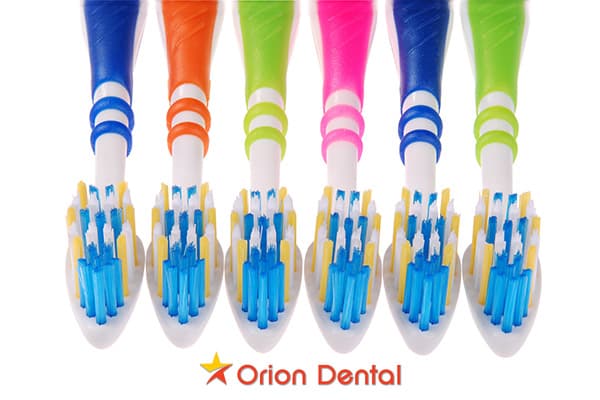
If you have decided to make the switch to an electric toothbrush — or replace your current one — the number of options available can be overwhelming. Models range from simple battery-powered brushes to high-end rechargeable units with Bluetooth connectivity, pressure sensors, and multiple cleaning modes.
Not every feature is necessary for every person. At Orion Dental in Scarborough and Milton, we help patients choose the right tools for their oral care routine. Here is what to consider when shopping for an electric toothbrush.
$8–175+
price range
3,000+
strokes/min (oscillating)
30,000+
strokes/min (sonic)
3 mo
head replacement interval
Battery-Powered vs. Rechargeable
The first decision is between a battery-powered model and a rechargeable one. Both are effective, but they work differently:
| Feature | Battery-Powered | Rechargeable |
|---|---|---|
| Price | $8–$25 | $30–$175+ |
| Power source | Disposable AA or AAA batteries | Built-in rechargeable battery with charging base |
| Brushing motion | You supply the brushing motion; the vibration adds extra cleaning | The brush does the work — you guide it along surfaces |
| Features | Basic vibration only | Timers, pressure sensors, multiple modes, app connectivity |
| Head replacement | Entire brush replaced | Snap-on heads replaced every 3 months |
| Portability | Easy to travel with | Requires charger or travel case |
For most patients, a rechargeable model offers a meaningful advantage because the brush head does the work for you. This is particularly helpful if you tend to rush through brushing, apply too much pressure, or have limited dexterity.
Understanding Brush Stroke Types
Electric toothbrushes use different cleaning technologies. Each approach has its merits, and no single type has been conclusively proven to outperform the others for all users:
Electric Toothbrush Technologies
Rotating
Bristles arranged in a small, round head that spins in one direction. Simple and effective for general cleaning.
Oscillating-Rotating
The round head rotates back and forth in alternating directions, creating a scrubbing motion that breaks up plaque effectively.
Pulsating
Adds an in-and-out pulsing action to the rotation, helping loosen plaque before the bristles sweep it away.
Counter-Oscillating
Groups of bristles rotate in different directions simultaneously, covering more surface area per stroke.
Sonic
The entire brush head vibrates at extremely high frequencies (30,000+ strokes per minute), creating fluid dynamics that help clean slightly beyond where bristles touch.
What We See in Practice
Both oscillating and sonic toothbrushes perform well in clinical use. The most important factor is that you use the brush consistently and correctly — guided slowly along every surface, spending at least two minutes total.
Key Features Worth Considering
Beyond the cleaning action itself, several features can improve your brushing experience and results:
Two-Minute Timer
The most useful feature on any electric toothbrush. It ensures you brush for the recommended duration and takes the guesswork out of timing.
Quadrant Timer
Pauses or pulses every 30 seconds to prompt you to move to the next section of your mouth, ensuring even coverage.
Pressure Sensor
Alerts you (usually with a light or vibration change) when you are pressing too hard. Excessive pressure can damage gums and enamel over time.
Multiple Cleaning Modes
Options like "sensitive," "deep clean," or "gum care" adjust speed and intensity. Helpful if you have varying needs.
Brush Head Variety
Some brands offer different head shapes for whitening, sensitive gums, or deep cleaning, allowing you to customise your routine.
Travel Case & Battery Life
If you travel frequently, look for models with long battery life (2+ weeks) and a compact travel case or USB charging.
Want a Personalised Recommendation?
Ask our team at your next cleaning — we are happy to help you choose.
Who Benefits Most from an Electric Toothbrush
While anyone can benefit from switching to an electric toothbrush, certain groups may notice the greatest improvement:
Ideal Candidates
- Children who are still learning proper brushing technique — electric brushes make it easier and more fun
- Older adults or anyone with reduced hand dexterity due to arthritis or other conditions
- People with braces or other orthodontic appliances who need to clean around brackets and wires
- Individuals who tend to brush too hard — a pressure sensor helps protect gums
- Anyone with a history of gum disease or heavy plaque buildup
- People who consistently brush for less than two minutes — the built-in timer solves this
If you wear braces or aligners, discuss toothbrush options with your orthodontic care provider. Certain brush heads are designed to navigate around brackets without causing damage.
What to Avoid When Choosing
Not every shiny feature adds value. Here are some pitfalls to watch for:
Common Pitfalls
- Choosing a brush based on brand alone without considering head size and comfort for your mouth
- Buying a model with expensive proprietary replacement heads you will not want to keep purchasing
- Selecting hard bristles — soft bristles are recommended for nearly everyone
- Paying a premium for app connectivity you will likely stop using after the first week
- Ignoring replacement head cost — budget for new heads every three months
How to Use Your Electric Toothbrush Properly
An electric toothbrush is only effective if used correctly. The technique differs from manual brushing:
Hold the brush at a 45-degree angle to the gum line and let the bristles do the work. Move slowly from tooth to tooth, spending a couple of seconds on each surface — outer, inner, and chewing surfaces. Avoid scrubbing back and forth as you would with a manual brush. The electric action provides the cleaning motion; you simply guide it.
Do not forget to brush your tongue, gums, and the roof of your mouth. Bacteria accumulate on these surfaces and contribute to bad breath and gum disease. After brushing, rinse the brush head thoroughly and store it upright to air dry.
Pro Tip
Even with an electric toothbrush, you still need to floss daily. No toothbrush can clean the tight spaces between teeth where plaque loves to hide.
Get Advice at Your Next Visit
Choosing the right electric toothbrush comes down to your mouth, your habits, and your budget. The most expensive model is not necessarily the right one for you. During your next checkup and cleaning, ask our team for a recommendation tailored to your needs.
Visit Orion Dental in Scarborough or Milton. Book an appointment or call 416-291-0306 (Scarborough) / 905-636-9770 (Milton).
Frequently Asked Questions
Common questions about electric toothbrushes
Are expensive electric toothbrushes worth the price?
Higher-priced models typically include features like pressure sensors, multiple cleaning modes, and smartphone connectivity. If you tend to brush too hard or want guided brushing, these extras can be helpful. However, even a basic rechargeable electric toothbrush can make thorough brushing easier for many people.
How often should I replace my electric toothbrush head?
Replace the brush head every three months, or sooner if the bristles are visibly frayed. Worn bristles are less effective at removing plaque and can irritate your gums.
Is an oscillating or sonic toothbrush better?
Both types are effective at removing plaque. Oscillating brushes use a rotating motion, while sonic brushes vibrate at high speeds. Neither motion is established as better than the other. Choose whichever feels more comfortable in your mouth.
Can children use electric toothbrushes?
Yes. Many brands offer electric toothbrushes designed for children with smaller heads, softer bristles, and fun features like musical timers. They can be an excellent way to make brushing more engaging for kids.
Do electric toothbrushes help with gum disease?
Electric toothbrushes can help reduce plaque buildup and gum inflammation, which are key contributors to gum disease. They are especially helpful for people who struggle with proper manual brushing technique.
Should I still floss if I use an electric toothbrush?
Absolutely. No toothbrush — manual or electric — can clean between your teeth where surfaces touch. Daily flossing or the use of interdental brushes remains essential for thorough plaque removal.
Related Articles
Continue reading about dental health