
4.64 out of 5 · 295 Google reviews
4.64 / 5 · Google
295 reviews across Milton & Scarborough.
New Year, New Plaque-Fighting Tools
Plaque is a sticky film of bacteria that builds on teeth through the day and starts hardening into tartar within about 24 hours. Four home tools work on different parts of the problem — an electric toothbrush with a two-minute timer, a water flosser for braces, bridges and implants, a tongue scraper for the bacteria behind bad breath, and a manual brush replaced every 90 days. None of them remove tartar once it has hardened; that needs a professional cleaning.

Orion Dental Team
Led by Dr. Fahimay Naqvi
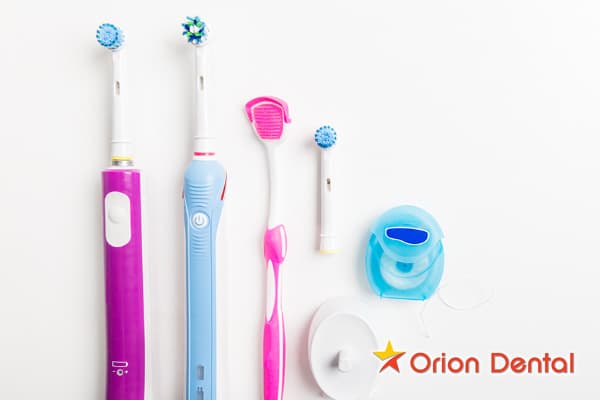
Every January, many Canadians set health-related resolutions — but how many include upgrading their oral hygiene routine? Plaque is a sticky film of bacteria that forms on your teeth throughout the day. Left unchecked, it hardens into tartar, contributes to cavities, and can lead to gum disease. The good news is that modern dental care tools make plaque removal easier and more effective than ever.
At Orion Dental, we encourage patients to think of the new year as an opportunity to refresh their at-home care toolkit. Here are the plaque-fighting tools worth considering this year.
Many
bacterial species live in plaque
24 hrs
for plaque to start hardening
90 days
recommended toothbrush replacement
5 tools
compared in this guide
What Does an Electric Toothbrush Cost?
Electric toothbrushes were once considered a luxury item, with quality models costing upwards of $150. Today, reliable rechargeable models start at around $30, making them accessible to most households. There are two main types:
Oscillating (rotary) brushes use small, round heads that spin back and forth, physically scrubbing plaque from tooth surfaces. Sonic brushes vibrate at high frequencies, creating fluid dynamics that help dislodge plaque even slightly beyond where the bristles touch. Both designs are intended to make thorough plaque removal easier, though technique and consistency matter more than the type of brush.
A practical advantage of electric toothbrushes is the built-in two-minute timerfound on most models. Many people underestimate how long two minutes actually is — the timer helps ensure you're brushing long enough to be effective. Some models also include pressure sensors that alert you if you're brushing too hard, which can damage gums and enamel over time.
Sharing Tip
Multiple family members can share a single electric toothbrush handle — just purchase individual colour-coded replacement heads for each person. This makes it a cost-effective upgrade for the whole household.
Water Flossers: A Faster Way to Clean Between Teeth
If traditional flossing feels like a chore, a water flosser might be the upgrade you need. These devices use a targeted stream of pulsating water to flush out food particles and bacteria from between teeth and along the gum line.
Water flossers are particularly helpful for people with braces, bridges, or dental implants, where traditional floss can be difficult to manoeuvre. They're also a good option for anyone with arthritis or limited hand dexterity.
Quality models start at around $50, and many dentists recommend using a water flosser in addition to traditional floss for the most thorough clean. The pulsating water reaches areas that string floss and even interdental brushes may miss, especially deep in periodontal pockets.
Tongue Scrapers: An Overlooked Essential
Plaque and bacteria don't just live on your teeth — they accumulate on your tongue as well. The rough surface of the tongue is an ideal breeding ground for bacteria, which is a major contributor to bad breath (halitosis).
A dedicated tongue scraper has both a scraping ridge for removing food particles and a textured surface for deeper cleaning and removing dead cells. While brushing your tongue with your toothbrush is helpful, a scraper is more effective because it covers more surface area in a single stroke and applies more even pressure.
Tongue scrapers cost just a few dollars and last for months. Use one each morning as part of your brushing routine — it takes less than 30 seconds and can make a noticeable difference in breath freshness.
Start the Year with a Clean Slate
Book a professional cleaning to kick off your new oral hygiene routine on the right foot.
The Manual Toothbrush: Still a Solid Choice
Not ready to go electric? A manual toothbrush used with proper technique is still an effective plaque-removal tool. The most important factor is replacing it regularly — every 90 days at minimum, or sooner if the bristles show signs of wear.
Choose a soft-bristled brush with a head small enough to reach your back molars comfortably. Brush at a 45-degree angle to the gum line using short, gentle strokes. Don't forget the inner surfaces of your teeth, the chewing surfaces, and a gentle brushing of your tongue.
When to Replace Your Toothbrush
- Every 90 days (set a calendar reminder)
- After recovering from a cold, flu, or other illness
- When bristles are visibly frayed or splayed outward
- If the bristles lose their firmness and feel flat
- After any dental procedure that involved bacteria management
Plaque-Fighting Tools at a Glance
Here's a quick comparison to help you decide which tools to add to your routine:
| Tool | Starting Cost | Plaque Removal | Ideal For |
|---|---|---|---|
| Electric toothbrush | ~$30 | Excellent | Daily brushing, timed sessions |
| Water flosser | ~$50 | Very good (interdental) | Braces, implants, bridges, dexterity issues |
| Tongue scraper | ~$5 | Good (tongue bacteria) | Bad breath reduction, daily use |
| Manual toothbrush | ~$3 | Good (with technique) | Travel, budget-friendly, quick replacement |
| Interdental brushes | ~$5 | Very good (between teeth) | Wider gaps, gum disease maintenance |
Building Your New Year Oral Hygiene Routine
The oral hygiene routine that helps most is the one you can stick with consistently. Here's a practical daily routine that incorporates these plaque-fighting tools:
Morning Routine
Scrape your tongue, brush for two minutes with fluoride toothpaste (electric or manual), floss or use a water flosser, and rinse with an antimicrobial mouthwash.
After Meals
Rinse with water after eating to wash away food particles. Chew xylitol gum if brushing isn't possible (a traditional home measure that does not replace care from a dentist). Avoid brushing immediately after acidic foods.
Evening Routine
Floss thoroughly (traditional or water flosser), brush for two minutes, and use mouthwash. This is the most important brushing session of the day.
Regular Checkups
Visit your dentist every six months for a professional cleaning and examination. Your hygienist can remove tartar that home tools cannot.
Pair Your New Tools with a Professional Cleaning
Home care tools are essential, but they work hand in hand with professional dental cleanings. No matter how diligently you brush and floss, tartar can accumulate in hard-to-reach areas that only a dental hygienist can address. A professional cleaning also gives your dentist the chance to check for early signs of gum disease, cavities, and other issues.
Start the year right. Book a cleaning at our Scarborough or Milton office. Book an appointment or call 416-291-0306 (Scarborough) / 905-636-9770 (Milton).
Frequently Asked Questions
Common questions about plaque-fighting tools
Are electric toothbrushes really better than manual ones?
Electric toothbrushes — particularly oscillating and sonic models — can make thorough plaque removal easier, especially for people who find brushing technique difficult. A manual toothbrush used correctly is also effective. The key factors are consistency and technique.
How often should I replace my toothbrush?
Replace your toothbrush (or electric toothbrush head) every three months, or sooner if the bristles are visibly frayed or splayed. Worn bristles are significantly less effective at removing plaque.
Do water flossers replace traditional floss?
Water flossers are an effective complement to traditional floss, especially for people with braces, bridges, or dexterity challenges. Some dental professionals recommend using both, but a water flosser alone is better than not flossing at all.
Is tongue scraping necessary?
Tongue scraping helps remove bacteria and food debris from the tongue surface, which can contribute to bad breath. While not strictly necessary, it's a helpful addition to your oral hygiene routine that takes only a few seconds.
What type of toothpaste should I use?
Look for a toothpaste with fluoride, which strengthens enamel and helps prevent cavities. Beyond that, choose based on your needs — sensitivity formulas for sensitive teeth, whitening pastes for surface stains, or antimicrobial pastes for gum health.
How often should I have a professional cleaning?
Most patients benefit from professional cleanings every six months. If you have a history of gum disease or are at higher risk for cavities, your dentist may recommend cleanings every three to four months.
Related Articles
Continue reading about dental health
How to Floss Your Teeth
A step-by-step guide to proper flossing technique for healthier gums.
Read moreGuide to Oral Health
A comprehensive guide to maintaining healthy teeth and gums at every age.
Read moreBad Breath — The Hows & Whys
Persistent bad breath can signal underlying issues. Learn the common causes and solutions.
Read more