
4.64 out of 5 · 295 Google reviews
4.64 / 5 · Google
295 reviews across Milton & Scarborough.
Protecting Your Child's Teeth During Sports Season
Fit your child with a custom mouthguard before the season starts, along with a certified helmet or face cage for their sport. A custom guard is made from an impression of your child's teeth, so it stays in place and allows comfortable breathing and speaking; boil-and-bite guards from a pharmacy offer some protection but fit less precisely. Growing mouths change, so a guard should be checked at each dental visit and replaced roughly every one to two years.

Orion Dental Team
Led by Dr. Fahimay Naqvi
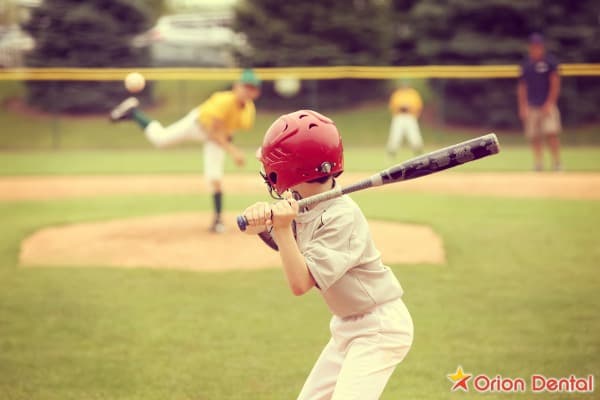
Sports are a wonderful part of childhood — they build fitness, teamwork, and confidence. But whether your child plays baseball, soccer, basketball, hockey, or martial arts, there is always a risk of dental injury. A ball to the face, an elbow during a scramble, or a fall from a bicycle can result in chipped, cracked, or knocked-out teeth.
The good news is that most sports-related dental injuries are preventable with the right precautions. At Orion Dental in Scarborough and Milton, we help families prepare for sports season with custom mouthguards, preventive advice, and emergency dental care when accidents do happen.
Common
cause of knocked-out teeth: sport
Higher
injury risk without a mouthguard
30 min
window to save a knocked-out tooth
Varies
cost of treating a dental injury
Protecting Teeth from the Outside — Helmets & Face Guards
For sports like baseball, softball, and cricket, a batting helmet with a protective face cage is a widely recommended way to help prevent dental and facial injuries. Modern face cages bolt securely onto the ear flaps and visor of a standard batting helmet, with bars spaced so that no opening is larger than the size of an official baseball.
Face guards are also available for hockey (full cage or visor), lacrosse, and football. For cycling, skateboarding, and scootering, a properly fitted helmet with a chin strap protects against falls that could impact the jaw and teeth. Check that your child's helmet fits correctly — it should sit level on the head, not tilted back, with the chin strap snug enough that only one finger fits underneath.
Helmet & Face Guard Checklist
- Helmet fits level on the head — not tilted forward or backward
- Chin strap is snug (one-finger test underneath)
- Face cage is securely attached with no loose bolts
- No cracks or damage from previous impacts — replace if compromised
- Appropriate certification for the sport (CSA, NOCSAE, etc.)
Protecting Teeth from the Inside — Custom Mouthguards
A mouthguard is a key piece of dental protection for any contact sport. It cushions blows to the face, distributes impact force, and prevents teeth from banging together — which can cause chips, cracks, and fractures. Mouthguards are designed primarily to protect the teeth and soft tissues.
While boil-and-bite mouthguards from the pharmacy offer some protection, a custom-fitted mouthguard from your dentistis made from an impression of your child's actual teeth. The result is a guard that fits precisely, stays in place, allows comfortable breathing and speaking, and provides significantly more protection than one-size-fits-all alternatives.
| Feature | Custom-Fitted | Boil-and-Bite | Stock (Off-the-Shelf) |
|---|---|---|---|
| Fit | Precise — made from dental impression | Moderate — mouldable | Poor — one size |
| Comfort | Comfortable, stays in place | Bulky, may shift | Bulky, often loose |
| Protection Level | High — even force distribution | Moderate | Minimal |
| Breathing | Unobstructed | Somewhat restricted | Often restricted |
| Cost | $150–$300 | $15–$40 | $5–$15 |
| Durability | 1–2 seasons | 1 season | Limited |
When to Get a Custom Mouthguard
Book a mouthguard consultation before the season starts so your child is protected from day one. The process involves a quick, comfortable impression of the teeth — the guard is typically ready within one to two weeks.
Get a Custom Mouthguard Before the Season
Protect your child's teeth with a professionally fitted mouthguard from Orion Dental.
Post-Game Snacking & Hydration
After a game or practice, many children reach for sugary sports drinks, juice boxes, and treats from the snack bar. While refuelling is important, what your child eats and drinks after sports matters for their teeth just as much as for their bodies.
Sports drinks are particularly concerning because they combine high sugar content with citric acid, creating a double threat to enamel. For most recreational youth sports, water is the appropriate hydration choice. Reserve sports drinks for prolonged, high-intensity activity lasting more than 60 minutes.
Be mindful of hard snacks as well. Sunflower seeds in the shell are a baseball dugout staple, but continuously chewing hard seeds can weaken, chip, and crack teeth over time. Opt for shelled seeds, cheese, fruit slices, or crackers instead.
Game Day Dental Routine
During the Game
Water is the go-to drink. Keep a labelled water bottle in the gear bag.
Post-Game Snack
Choose fruit, cheese, or crackers over candy bars and chips. Avoid sticky and hard snacks.
Rinse with Water
A quick rinse helps wash away sugar and acid before brushing later at home.
Brush Before Bed
Even after a late game, thorough brushing and flossing before bed is essential.
What to Do If a Dental Injury Occurs
Even with the right precautions, accidents can happen. Knowing what to do in the first few minutes after a dental injury can make the difference between saving and losing a tooth. Here is a quick reference for the most common sports-related dental emergencies:
Knocked-Out Tooth
Find the tooth, pick it up by the crown (white part) — never the root. Gently rinse off any dirt without scrubbing. If possible, reinsert the tooth into the socket and have your child hold it in place by gently biting on a clean cloth. If reinsertion is not possible, place the tooth in a cup of cold milk or your child's own saliva. Get to a dentist within 30 minutes for the highest chance of saving the tooth.
Chipped or Cracked Tooth
Rinse the mouth with warm water and apply a cold compress to reduce swelling. Save any broken pieces if possible. Contact your dentist — a dental crown or bonding may be needed depending on the extent of the damage.
Loose Tooth (from Impact)
Have your child avoid touching or wiggling the tooth. Eat only soft foods and schedule a dental visit as soon as possible. The dentist may splint the tooth to stabilise it while the surrounding tissues heal.
Save Our Number
Add Orion Dental's phone number to your contacts before the season starts. For dental emergencies, call 416-291-0306 (Scarborough) or 905-636-9770 (Milton). Quick action can save a tooth.
Which Sports Require Dental Protection?
Any sport with a risk of contact, collision, or falls warrants dental protection. This includes more activities than many parents realise:
Baseball & Softball
Face cages on batting helmets plus a mouthguard for fielding and base running.
Hockey & Lacrosse
Full cage or visor plus a custom mouthguard — mandatory in most leagues.
Soccer & Basketball
A custom mouthguard is strongly recommended, as collisions are common.
Martial Arts & Wrestling
Mouthguards are typically required in competition and advised during training.
Cycling & Skateboarding
A certified helmet with chin strap protects against falls involving the face.
Gymnastics & Trampolining
Falls and missteps can cause impact to the mouth — consider a mouthguard for training.
Get Game-Ready at Orion Dental
A custom mouthguard, a properly fitted helmet, and awareness of post-game snacking habits can go a long way toward protecting your child's smile throughout the season. Our children's dentistry team is happy to discuss your child's sports activities and recommend the right level of protection.
Book a mouthguard fitting or checkup at our Scarborough or Milton office. Book an appointment or call 416-291-0306 (Scarborough) / 905-636-9770 (Milton).
Frequently Asked Questions
Common questions about dental protection during sports
What type of mouthguard is recommended for children?
A custom-fitted mouthguard made by your dentist provides the most reliable protection. It is designed from an impression of your child's teeth, ensuring a snug fit that stays in place during play and absorbs impact effectively.
At what age should my child start wearing a mouthguard?
Children should begin wearing a mouthguard as soon as they participate in contact sports or activities with a risk of falls or collisions — typically around age 6 or 7, when permanent teeth start coming in.
Are boil-and-bite mouthguards effective?
Boil-and-bite mouthguards from a pharmacy offer some protection, but they tend to be bulkier, less comfortable, and provide a less precise fit compared to custom-made options. A custom mouthguard is generally the preferred choice for regular athletes.
What should I do if my child's tooth is knocked out during a game?
Pick up the tooth by the crown (not the root), gently rinse it without scrubbing, and try to reinsert it into the socket. If that is not possible, place it in a cup of milk or saliva and get to a dentist within 30 minutes for the highest chance of saving the tooth.
Do mouthguards need to be replaced?
Yes. Children's mouths change rapidly as they grow. A custom mouthguard should be re-evaluated at each dental checkup and replaced when it no longer fits properly — typically every one to two years, or sooner if visibly worn.
Can sports drinks cause cavities?
Yes. Most sports drinks contain significant amounts of sugar and citric acid, both of which contribute to enamel erosion and cavities. Water is the preferred hydration choice for most recreational youth sports.
Related Articles
Continue reading about children's dental health
Your Mid-Summer Dental Checklist for Kids
A practical checklist to keep your child's dental health on track during the summer holidays.
Read more5 Low-Sugar Summer Snack Ideas for Kids
Healthy, tooth-friendly snack ideas to keep your kids fuelled all summer long.
Read moreWhat Is a Root Canal?
Everything you need to know about root canal treatment — when it's needed and what to expect.
Read more