
4.64 out of 5 · 295 Google reviews
4.64 / 5 · Google
295 reviews across Milton & Scarborough.
Braces for Adults: What You Need to Know
There is no age limit for orthodontic treatment — if your teeth and gums are healthy, braces or clear aligners can move teeth at any age. Adults can choose metal or ceramic braces, lingual braces bonded behind the teeth, or removable clear aligners, with treatment usually running 12 to 24 months. Existing cavities, gum disease or damaged restorations need to be treated first, and brackets and wires make thorough daily cleaning harder while treatment is under way.

Orion Dental Team
Led by Dr. Fahimay Naqvi
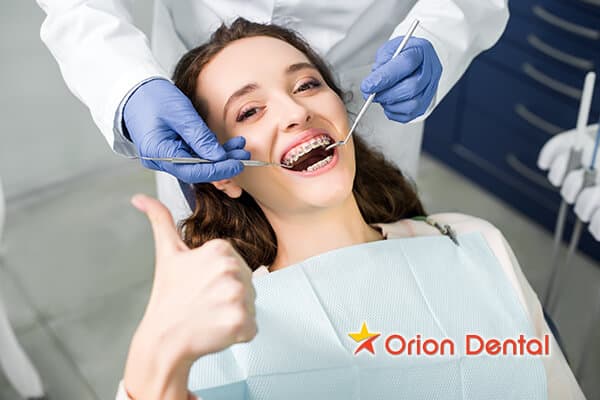
For decades, braces were associated almost exclusively with adolescence. If you missed out on orthodontic treatment as a child or teen, you may have assumed that ship had sailed. The reality is quite different: there is no age limit for orthodontic treatment, and modern options are more discreet, comfortable, and accessible than ever before.
At Orion Dental in Scarborough and Milton, we see a growing number of adult patients pursuing orthodontic treatment. Whether you're motivated by health concerns, aesthetic goals, or both, this guide covers everything you need to know about getting braces as an adult.
Many
orthodontic patients are adults
12–24 mo
typical treatment time
4+ options
available for adults
No limit
on treatment age
Why Adults Choose Braces
Adults pursue orthodontic treatment for many reasons, and the motivation is rarely just cosmetic. Misaligned teeth can affect your oral health, comfort, and overall well-being in ways that compound over time.
Common Reasons Adults Seek Orthodontic Treatment
- Crowded or crooked teeth that are difficult to clean properly
- Bite issues causing jaw pain, headaches, or uneven tooth wear
- Self-consciousness about the appearance of their smile
- Previous orthodontic treatment that relapsed due to not wearing retainers
- Teeth shifting over time due to natural ageing, tooth loss, or gum disease
- Preparing for other dental work (implants, crowns, or veneers) that requires better alignment
- Difficulty chewing or speaking due to misalignment
It's Not Just About Looks
While a straighter smile is often the visible result, the functional benefits of properly aligned teeth are significant. Easier cleaning, more even bite forces, and reduced risk of tooth damage all contribute to better long-term oral health. Your dentist can explain how alignment relates to your specific concerns.
Orthodontic Options Available for Adults
Today's adult patients have more choices than ever. The right option depends on your clinical needs, lifestyle, budget, and aesthetic preferences.
| Option | Visibility | Suitable For | Key Consideration |
|---|---|---|---|
| Metal Braces | Visible | All case types, including complex | Suitable for the widest range of cases; fees vary |
| Ceramic Braces | Semi-visible | Most case types | Tooth-coloured brackets; slightly more fragile |
| Lingual Braces | Hidden | Most case types | Placed behind teeth; may affect speech initially |
| Invisalign | Nearly invisible | Mild to moderate cases | Removable; requires 20–22 hrs daily wear |
| Clear Retainers | Invisible | Very minor adjustments only | Not suitable for significant correction |
Metal and Ceramic Braces
Traditional metal braces remain the most versatile option, capable of addressing everything from mild crowding to complex bite corrections. Modern brackets are significantly smaller than those of previous decades. Ceramic braces offer the same functionality with tooth-coloured brackets that blend more naturally with your smile — a popular choice among adult patients who want a less conspicuous fixed option.
Lingual Braces
Lingual braces are bonded to the inner (tongue-side) surfaces of your teeth, making them virtually invisible from the outside. They work the same way as traditional braces but are custom-fitted to the lingual surface of each tooth. This option is particularly appealing for professionals and adults who prefer complete discretion during treatment.
Invisalign Clear Aligners
Invisalign uses a series of clear, removable aligners to move teeth gradually. The aligners are nearly invisible and can be removed for eating, drinking, and oral hygiene. Invisalign is well-suited for adults with mild to moderate alignment issues who value flexibility and aesthetics. However, it requires consistent daily wear (20 to 22 hours) to be effective.
What to Expect During Treatment
Adult orthodontic treatment follows a clear, predictable path. Here is what the process typically looks like from start to finish:
The Adult Orthodontic Treatment Timeline
Initial Consultation
Comprehensive exam including digital X-rays, photos, and impressions or 3D scans. Your dentist assesses your bite, alignment, and overall oral health.
Pre-Treatment Dental Work
Any cavities, gum issues, or damaged restorations are addressed before orthodontic treatment begins. A healthy mouth is essential.
Treatment Plan Presentation
Your dentist presents treatment options, estimated timelines, costs, and what to expect. You choose the approach that works for you.
Appliance Placement
Braces are bonded or aligners are delivered. Your dentist provides detailed care instructions and schedules your first follow-up.
Regular Adjustments
Appointments every 4–8 weeks to monitor progress and make adjustments. Treatment duration is typically 12–24 months.
Retention Phase
After active treatment, a custom retainer maintains your results. Full-time wear initially, then transitioning to nightly wear.
How Adult Treatment Differs from Adolescent Treatment
While the principles of orthodontics are the same regardless of age, there are some important differences when treating adults:
Bone Density
Adult bone is denser and fully developed, which can mean slightly longer treatment times compared to adolescents whose bones are still growing.
Existing Dental Work
Adults are more likely to have crowns, bridges, fillings, or missing teeth that need to be factored into the treatment plan.
Gum Health
Periodontal health must be stable before treatment begins. Adults with a history of gum disease may need periodontal therapy first.
Root Resorption Risk
Adults may be at slightly higher risk of root shortening during treatment. Your dentist monitors this with periodic X-rays.
Lifestyle Integration
Adult patients often have professional and social considerations that influence their choice of appliance — discreet options are popular.
Motivation & Compliance
Adults tend to be highly motivated and compliant with care instructions, which can contribute to positive treatment outcomes.
Considering Braces as an Adult?
Book a consultation to explore your options and get a personalised treatment plan.
Oral Hygiene During Adult Orthodontic Treatment
Good oral hygiene is always important, but it becomes critical during orthodontic treatment. Brackets and wires create additional surfaces where plaque can accumulate, and adults may already have areas of concern that require extra attention.
Hygiene Tips for Adults with Braces
- Brush after every meal using a soft-bristle toothbrush and fluoride toothpaste
- Use an interdental brush or floss threader to clean between teeth and around brackets
- Rinse with an antimicrobial or fluoride mouthwash daily
- Consider a water flosser for more effective cleaning around brackets and wires
- Attend regular dental cleanings — your dentist may recommend more frequent visits during treatment
- Watch for signs of gum inflammation and report any concerns to your dental team promptly
Regular dental checkups throughout treatment allow your dentist to monitor for cavities, gum issues, or decalcification (white spots) around brackets — catching problems early before they become significant.
Cost and Insurance Considerations
The cost of adult orthodontic treatment in Ontario varies based on case complexity, treatment duration, and the type of appliance chosen. More discreet options like ceramic braces, lingual braces, and Invisalign may carry a higher cost than traditional metal braces.
Many dental insurance plans provide partial orthodontic coverage for adults, though coverage amounts and lifetime maximums vary by plan. It's worth checking your benefits or contacting your insurance provider before your consultation. At Orion Dental, we provide detailed cost breakdowns and offer flexible financing options to make treatment more accessible.
Flexible Payment Options
We understand that orthodontic treatment is an investment. Orion Dental offers interest-free payment plansand will work with your insurance provider to maximise your coverage. We'll discuss all costs upfront during your consultation so there are no surprises.
Preparing for Orthodontic Treatment
Before braces can be placed, your mouth needs to be in good overall health. Your dentist will evaluate for and address any existing issues:
Pre-Treatment Checklist
- Comprehensive dental exam and digital X-rays
- Treatment of any active cavities or decay
- Assessment and management of gum disease if present
- Repair or replacement of damaged or failing restorations
- Evaluation of wisdom teeth — removal may be recommended
- Discussion of any jaw joint (TMJ) concerns
Addressing these issues first ensures that your teeth and supporting structures are healthy enough to handle the forces involved in orthodontic movement. Your dentist may coordinate with a periodontist or oral surgeon if specialised care is needed before treatment begins.
Living with Braces as an Adult
Adjusting to braces takes time, but most adults find that the initial adaptation period passes quickly. Here are some practical tips for navigating daily life with braces:
The first week is typically the most challenging. Your teeth and mouth need time to adjust to the new appliance. Soft foods can help during this period, and your dentist will explain how to manage any discomfort or irritation.
At work and social events, you may feel self-conscious initially, but this fades quickly. If visibility is a significant concern, ceramic braces, lingual braces, or Invisalign offer discreet alternatives. Many adults find that people are more supportive — and less observant — than expected.
Exercise and sports can continue normally in most cases. If you play contact sports, a custom mouth guard designed to fit over braces can protect both your appliance and your teeth.
Getting Started with Adult Orthodontics
If you've been thinking about straightening your teeth, there has never been a more convenient time to do it. With multiple treatment options, flexible scheduling, and discreet appliances, adult orthodontics fits into modern life more easily than you might expect.
Our team at Orion Dental provides personalised orthodontic care and cosmetic dentistry services for adults at every stage. We'll help you understand your options, create a realistic timeline, and develop a plan that fits your goals and budget.
Schedule a consultation at our Scarborough or Milton office. Book an appointment or call 416-291-0306 (Scarborough) / 905-636-9770 (Milton).
Frequently Asked Questions
Common questions about adult orthodontic treatment
Am I too old for braces?
There is no upper age limit for orthodontic treatment. As long as your teeth and gums are healthy, braces or clear aligners can be effective at any age. Your dentist will assess your oral health to confirm you are a suitable candidate.
How long does adult orthodontic treatment take?
Treatment typically ranges from 12 to 24 months, depending on the complexity of your case. Some minor corrections can be completed in as few as 6 months, while more involved cases may take longer.
Will braces affect my professional appearance?
Several discreet options are available, including ceramic (clear) braces, lingual braces placed behind the teeth, and Invisalign clear aligners. Many adults complete treatment without others noticing.
Are adult braces more expensive than braces for children?
Adult treatment can sometimes cost more due to increased case complexity, the need for additional dental work before treatment, or the choice of more discreet materials. However, costs vary widely based on individual needs, and financing options are available.
Do I need to have any dental work done before getting braces?
Yes, any existing dental issues — such as cavities, gum disease, or damaged restorations — should be addressed before beginning orthodontic treatment. This ensures a healthy foundation for tooth movement.
Can I get braces if I have crowns or dental work?
In most cases, yes. Braces can be placed on teeth with crowns, though the bonding approach may differ. Your dentist will evaluate your existing dental work and develop a plan that accounts for it.
Related Articles
Continue reading about orthodontic care
Invisalign vs Braces: Which Is Right for You?
Compare Invisalign and traditional braces across comfort, cost, effectiveness, and lifestyle factors.
Read moreBraces vs Retainers: Understanding the Difference
Learn how braces and retainers serve different roles in your orthodontic journey.
Read moreGuide to Oral Health
Maintaining excellent oral hygiene is especially important during orthodontic treatment.
Read more