
4.64 out of 5 · 295 Google reviews
4.64 / 5 · Google
295 reviews across Milton & Scarborough.
Invisalign vs Braces: Which Is Right for You?
Invisalign uses a series of removable clear aligners, while traditional braces use metal brackets bonded to each tooth and joined by an archwire. Both typically take 12 to 24 months and both need a retainer afterwards to hold the result. Aligners only work if they are worn 20 to 22 hours a day, and braces may suit complex cases involving severe rotations or significant bite corrections better.

Orion Dental Team
Led by Dr. Fahimay Naqvi
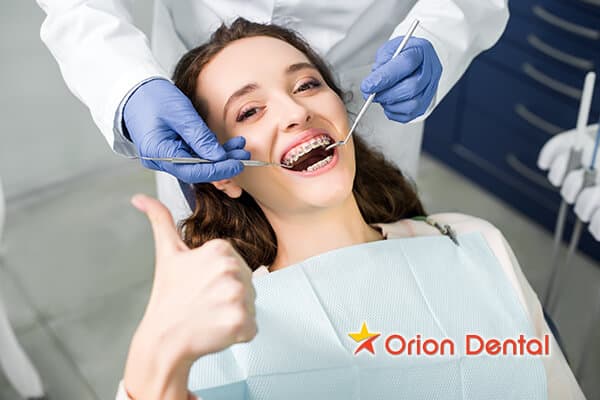
If you're considering straightening your teeth, you've likely weighed the pros and cons of Invisalign clear aligners versus traditional metal braces. Both are proven, effective approaches to orthodontic correction — but they differ in visibility, comfort, maintenance, and suitability for different dental conditions.
At Orion Dental in Scarborough and Milton, we offer both Invisalign and traditional braces, and we help patients select the approach that fits their clinical needs, budget, and daily routine. This guide breaks down the key differences so you can enter your consultation well-informed.
12–24 mo
typical treatment time
20–22 hrs
daily Invisalign wear
4–8 wks
adjustment intervals
2 options
to compare with your dentist
What Is Invisalign?
Invisalign uses a series of custom-made, clear plastic aligners to gradually shift your teeth into the desired position. Each set of aligners is worn for approximately one to two weeks before being replaced with the next set in the series.
The aligners are crafted using 3D digital scans of your teeth, allowing your dentist to map out a precise treatment plan from start to finish. Small tooth-coloured attachments may be bonded to certain teeth to help the aligners grip and facilitate more complex movements.
Invisalign has advanced significantly since its introduction in the late 1990s. Modern aligner technology can now address crowding, spacing, overbites, underbites, crossbites, and open bites — though the severity of the condition and patient compliance play a major role in determining outcomes.
What Are Traditional Braces?
Traditional braces consist of metal brackets bonded to each tooth, connected by a metal archwire. The wire applies continuous, controlled pressure to move teeth into alignment over time. Elastic bands (ligatures) hold the wire in place and can be adjusted at regular appointments.
Braces remain one of the most versatile orthodontic tools available. They can treat a wide range of conditions, from minor crowding to complex bite corrections, severe rotations, and significant jaw discrepancies. Modern braces are smaller and more streamlined than those of previous decades.
Beyond traditional metal, patients can also choose ceramic (clear) braces for a less visible option, or lingual braces, which are placed on the inner surfaces of the teeth and are virtually hidden from view.
Head-to-Head Comparison
The following table summarises the key differences between Invisalign and traditional braces across the factors that matter most to patients:
| Factor | Invisalign | Traditional Braces |
|---|---|---|
| Appearance | Nearly invisible clear aligners | Visible brackets and wires (metal or ceramic) |
| Removability | Removable for eating, brushing, flossing | Fixed — bonded to teeth for the duration |
| Comfort | Smooth plastic; may cause initial pressure | Brackets may irritate cheeks/lips initially |
| Eating | No food restrictions (aligners removed) | Avoid hard, sticky, and chewy foods |
| Oral Hygiene | Brush and floss normally | Requires specialised tools (threaders, interdental brushes) |
| Appointments | Every 6–8 weeks; shorter visits | Every 4–6 weeks; wire adjustments needed |
| Treatment Range | Mild to moderate cases; expanding to complex | Mild to severe and complex cases |
| Compliance | Requires 20–22 hours daily wear | No compliance needed — always working |
| Treatment Time | 12–24 months (varies by case) | 12–24 months (varies by case) |
| Retainer Needed | Yes — post-treatment retention | Yes — post-treatment retention |
Effectiveness: What Can Each Option Treat?
Both Invisalign and braces are effective for a range of orthodontic concerns. However, the complexity of your case is one of the most important factors in determining which option is suitable.
Conditions Commonly Treated by Both
Treatable with Invisalign or Braces
- Mild to moderate crowding
- Spacing and gaps between teeth
- Overbite and overjet
- Underbite (mild to moderate)
- Crossbite
- Open bite (mild cases)
When Braces May Be the Preferred Option
For certain complex situations, traditional braces may provide more predictable results:
Braces May Be Preferred For
- Severe tooth rotations requiring precise torque control
- Significant vertical tooth movements (intrusion or extrusion)
- Complex bite corrections involving jaw alignment
- Cases requiring tooth extraction and large space closure
- Younger patients who may struggle with aligner compliance
A Note on Modern Aligners
Invisalign technology continues to evolve. With the addition of SmartTrack material and precision attachments, many cases that previously required braces can now be treated with aligners. Your dentist will assess whether your specific situation is suitable for Invisalign during your consultation.
Comfort and Lifestyle Considerations
Your daily routine plays a significant role in which option may work for you. Here are the practical differences patients notice most:
Eating and Diet
With Invisalign, you simply remove your aligners before eating or drinking anything other than water. There are no food restrictions — you can enjoy all the foods you normally would, as long as you clean your teeth before reinserting the aligners.
With braces, certain foods should be avoided to prevent bracket breakage. Hard foods (nuts, raw carrots, hard candies), sticky foods (caramel, toffee, chewing gum), and foods that require biting with the front teeth (corn on the cob, whole apples) are typically off-limits.
Oral Hygiene During Treatment
Maintaining good oral hygiene is critical during any orthodontic treatment. Invisalign has an advantage here: since the aligners are removable, you can brush and floss normally. Braces require more effort — patients need floss threaders, interdental brushes, and extra time to clean around brackets and wires. Regular dental checkups are important throughout treatment to monitor for any issues.
Physical Comfort
Both options cause some discomfort as teeth shift — this is normal and expected. Many patients report that Invisalign feels more comfortable overall due to its smooth plastic edges. Braces can occasionally cause irritation to the inner cheeks and lips, particularly after adjustments; your dentist can advise you on managing this.
Ready to Explore Your Options?
Book a consultation to discuss whether Invisalign or braces is the right fit for your smile.
Cost Considerations
One of the most frequent questions we receive is about cost. The reality is that pricing varies significantly based on several factors:
Case Complexity
More complex movements, extractions, or bite corrections increase treatment cost regardless of the method chosen.
Treatment Duration
Longer treatment timelines generally come with higher fees, as more appointments and materials are required.
Materials Used
Ceramic braces and lingual braces cost more than standard metal braces. Invisalign Express costs less than comprehensive Invisalign.
Insurance Coverage
Many dental insurance plans in Ontario provide partial orthodontic coverage. Check your plan for specific details and annual maximums.
For comparable cases, the cost of Invisalign and traditional braces is often similar. At Orion Dental, we provide a detailed cost breakdown during your consultation so there are no surprises.
What Does the Treatment Process Look Like?
Regardless of which option you choose, the journey follows a similar path:
The Orthodontic Treatment Journey
Initial Consultation
Comprehensive exam, digital X-rays, and discussion of your goals. Your dentist evaluates your bite, alignment, and oral health.
Treatment Planning
For Invisalign, 3D digital scans create your custom plan. For braces, your dentist selects bracket placement and wire sequences.
Appliance Placement
Braces are bonded in a single appointment. Invisalign aligners are delivered and you receive instructions on wear and care.
Regular Adjustments
Braces: wire adjustments every 4–6 weeks. Invisalign: progress checks every 6–8 weeks with new aligner sets.
Treatment Complete
Braces are removed or final aligners are finished. Impressions or scans are taken for your custom retainer.
Retention Phase
Retainers are worn as directed — typically full-time initially, then nightly — to maintain your results long-term.
Who Is a Good Candidate for Each?
The right choice depends on your clinical needs, lifestyle preferences, and personal discipline. Here are some general guidelines:
Invisalign May Be a Good Fit If You:
- Have mild to moderate crowding, spacing, or bite issues
- Value discretion and prefer a less visible treatment
- Can commit to wearing aligners 20–22 hours daily
- Want the ability to remove your appliance for eating and special occasions
- Are comfortable managing your own aligner schedule
Traditional Braces May Be a Good Fit If You:
- Have complex orthodontic needs requiring precise tooth control
- Prefer a fixed appliance that works continuously without daily management
- Are a younger patient or parent choosing for a child or teen
- Need significant bite correction or jaw-related adjustments
- Want a proven approach for severe crowding or rotations
After Treatment: The Importance of Retainers
Regardless of whether you choose Invisalign or braces, retention is essential. Teeth have a natural tendency to drift back toward their original positions — a process called relapse. Your dentist will provide a custom retainer and a wear schedule to protect your investment in your smile.
Retainer options include clear removable retainers (similar in appearance to Invisalign trays), Hawley retainers (a moulded plastic and wire design), and permanent bonded retainers (a thin wire fixed behind the front teeth). Your dentist will recommend the most appropriate type based on your treatment and individual needs.
Protecting Your Results
Consistent retainer wear is the single most important thing you can do after orthodontic treatment. Most patients transition from full-time to nightly wear within the first few months, and many continue nightly retainer use indefinitely to keep their teeth in position.
Making Your Decision
Choosing between Invisalign and braces is a personal decision that should be guided by a thorough assessment of your teeth, bite, and goals. Both are proven, effective methods for achieving a healthier, straighter smile — and the right choice is the one that fits your clinical needs and daily life.
At Orion Dental, we offer comprehensive Invisalign treatment and orthodontic care at both of our locations. Our team takes the time to explain your options, answer your questions, and develop a plan that works for you.
Schedule a consultation at our Scarborough or Milton office. Book an appointment or call 416-291-0306 (Scarborough) / 905-636-9770 (Milton).
Frequently Asked Questions
Common questions about Invisalign and braces
Is Invisalign as effective as traditional braces?
Invisalign can treat many of the same conditions as braces, including crowding, spacing, and mild to moderate bite issues. However, braces may be more suitable for complex cases involving severe rotations or significant bite corrections. Your dentist can advise which option is appropriate for your specific situation.
How long does treatment take with Invisalign vs braces?
Treatment timelines are often similar, typically ranging from 12 to 24 months depending on case complexity. Invisalign treatment length also depends on consistent aligner wear of 20 to 22 hours per day.
Are braces more painful than Invisalign?
Both options involve pressure on the teeth to facilitate movement, which can cause temporary discomfort. Many patients find Invisalign aligners more comfortable due to their smooth plastic surfaces, while braces brackets and wires can occasionally irritate the cheeks and lips.
Can adults get Invisalign or braces?
Yes. Both Invisalign and braces are suitable for adults. In fact, a growing number of adults are pursuing orthodontic treatment. Your dentist will assess your oral health and discuss which option aligns with your goals and lifestyle.
How much do Invisalign and braces cost in Ontario?
Costs vary depending on case complexity, treatment duration, and materials. For comparable cases, the cost of Invisalign and braces is often similar. Many dental insurance plans provide partial coverage, and financing options are typically available.
Do I need a retainer after Invisalign or braces?
Yes. Retainers are an essential part of both treatment plans. After your teeth have been moved into their new positions, a retainer helps maintain alignment and prevent relapse. Your dentist will recommend the type and duration of retainer wear.
Related Articles
Continue reading about orthodontic treatment
Braces vs Retainers: Understanding the Difference
Learn how braces and retainers serve different roles in orthodontic treatment and when each is used.
Read moreBraces for Adults: What You Need to Know
Adult orthodontics is more common than ever. Explore your options and what to expect.
Read moreUnderstanding the 4 Stages of Gum Disease
Good oral health is essential before starting orthodontic treatment. Learn about gum disease prevention.
Read more