
4.64 out of 5 · 295 Google reviews
4.64 / 5 · Google
295 reviews across Milton & Scarborough.
Braces vs Retainers: Understanding the Difference
Braces move teeth; retainers hold them in place. Braces are the active phase, applying controlled pressure to shift teeth into alignment over roughly 18 to 24 months, while a retainer is worn afterwards to keep them where they were moved to. Teeth naturally tend to drift back toward their original positions, especially in the first year after treatment, so most patients wear a retainer full-time at first and then nightly, often over the long term.

Orion Dental Team
Led by Dr. Fahimay Naqvi
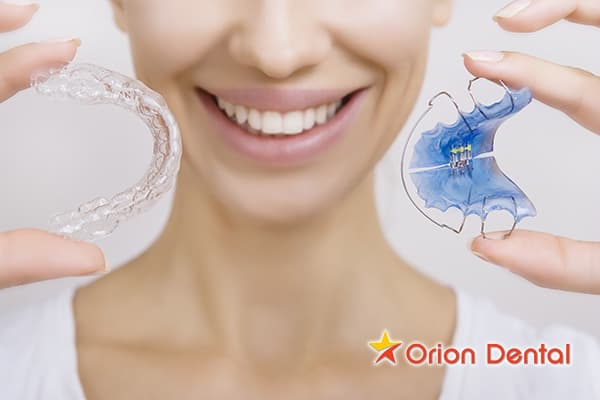
If you're exploring orthodontic treatment, you've probably encountered both braces and retainers— and wondered how they differ. While they're often mentioned together, these two appliances play distinct roles in creating and maintaining a straight, healthy smile.
In simple terms: braces move teeth; retainers hold them in place. Braces are the active treatment phase — they apply controlled pressure to gradually shift teeth into alignment. Retainers come after, ensuring your teeth stay where they've been moved. At Orion Dental in Scarborough and Milton, we guide patients through both phases for lasting results.
18–24 mo
typical braces duration
3 types
of retainers available
24/7
initial retainer wear
Long-term
retainer wear is usually advised
Key Differences at a Glance
This comparison table highlights the fundamental differences between braces and retainers:
| Feature | Braces | Retainers |
|---|---|---|
| Purpose | Move teeth into correct alignment | Maintain teeth in their new position |
| Attachment | Bonded (cemented) to teeth | Removable or bonded behind teeth |
| Structure | Metal/ceramic brackets with archwire | Clear plastic tray, wire-and-acrylic, or bonded wire |
| Duration | 12–24 months (active treatment) | Months to years (often indefinite at night) |
| Suitable For | Complex alignment and bite issues | Maintaining results; minor adjustments only |
| Discomfort | Pressure after adjustments; cheek irritation | Minimal; mild pressure when first worn |
| Appointments | Every 4–6 weeks for adjustments | Periodic checks; less frequent |
| Oral Hygiene | Requires specialised cleaning tools | Normal brushing/flossing (removable types) |
| Visibility | Visible (metal) or semi-visible (ceramic) | Invisible (clear) or hidden (bonded/lingual) |
How Braces Work
Braces are the active treatment phase of orthodontics. They consist of small brackets bonded to each tooth, connected by a metal archwire. The wire applies continuous, controlled force to gradually move teeth through the bone. Elastic bands (ligatures) or self-ligating clips hold the wire in place, and additional components like rubber bands may be used to correct bite alignment.
Types of Braces Available
Modern orthodontics offers several braces options to suit different preferences and needs:
Metal Braces
The most common option, and typically lower in cost than the alternatives. Small stainless steel brackets provide precise control for all case types.
Ceramic Braces
Tooth-coloured or clear brackets that blend with your teeth. Functionally similar to metal braces but less visible.
Lingual Braces
Brackets placed on the inner (tongue-side) surfaces of teeth. Virtually invisible from the front but may take longer to adjust to.
Self-Ligating Braces
Use built-in clips instead of elastic ties. May reduce appointment frequency and improve comfort for some patients.
What Braces Can Treat
Common Conditions
- Crowding — overlapping or twisted teeth
- Spacing — gaps between teeth
- Overbite — upper front teeth extend too far over lower teeth
- Underbite — lower teeth protrude past upper teeth
- Crossbite — misalignment of upper and lower dental arches
- Open bite — front teeth do not meet when mouth is closed
- Severe rotations and complex bite corrections
How Retainers Work
Once braces have moved your teeth into their desired positions, retainers prevent them from shifting back. This is critical because the bone and soft tissue surrounding your teeth need time to stabilise around the new positions. Without a retainer, teeth will naturally drift toward their original alignment — a process known as orthodontic relapse.
Types of Retainers
Retainer Options
Clear Plastic Retainers
Custom-moulded transparent trays similar in appearance to Invisalign aligners. Removable for eating and cleaning. Popular for their discreet appearance.
Hawley Retainers
A moulded acrylic plate that fits the roof of your mouth (or behind lower teeth) with a wire that wraps around the front teeth. Durable and adjustable.
Permanent Bonded Retainers
A thin wire bonded to the back of the front teeth. Worn continuously and requires careful flossing. Provides retention without daily compliance.
Can Retainers Replace Braces?
In rare cases involving very minor tooth movement, a retainer may be used on its own. However, retainers are not designed as a primary treatment tool. If you need significant alignment correction, braces or Invisalign will be necessary. Your dentist will assess whether your case can be managed with a retainer alone.
Questions About Orthodontic Treatment?
Book a consultation to discuss braces, retainers, or Invisalign with our team.
The Complete Orthodontic Journey: Braces Then Retainers
Braces and retainers are not competing options — they are sequential stages of the same treatment. Understanding the full timeline helps set expectations:
From Braces to Retainers
Assessment
Your dentist evaluates your teeth, bite, and jaw using exams, X-rays, and impressions or digital scans.
Active Treatment (Braces)
Brackets and wires are placed. Regular adjustments guide teeth into proper alignment over 12–24 months.
Braces Removal
Once alignment goals are met, brackets and wires are carefully removed. Impressions are taken for your retainer.
Full-Time Retention
Retainer worn 22+ hours daily for the first several months. Teeth and bone stabilise in their new positions.
Nightly Retention
Retainer wear transitions to nightly only. Most dentists recommend continuing nightly wear long-term.
Caring for Braces and Retainers
Proper care extends the life of your orthodontic appliances and protects your oral health throughout treatment. Good hygiene habits are particularly important because both braces and retainers sit close to the tooth surface, where plaque can accumulate.
Braces Care
- Brush after every meal using a soft-bristle brush angled at 45 degrees toward the gum line
- Use floss threaders or orthodontic flossers to clean between teeth and under the wire
- Rinse with fluoride mouthwash daily to help prevent demineralisation around brackets
- Avoid hard, sticky, and crunchy foods that can damage brackets or wires
- Attend all scheduled adjustment appointments
Retainer Care
- Clean removable retainers daily with a soft brush and mild soap (avoid hot water)
- Store removable retainers in their case when not being worn — never wrap in a napkin
- For bonded retainers, use floss threaders to clean under the wire daily
- Keep retainers away from pets — they are frequently chewed or destroyed
- Replace clear retainers when they become cracked, warped, or no longer fit snugly
- Bring your retainer to dental appointments so your dentist can check the fit
Protecting Your Investment
Orthodontic treatment represents a significant investment of time and money. Wearing your retainer as directed is the simplest way to ensure that investment lasts. Most cases of relapse occur because patients discontinued retainer wear too soon.
Diet Considerations with Braces
While wearing braces, you'll need to be mindful of what you eat. Certain foods can damage brackets, bend wires, or become trappedin hard-to-clean areas. Here's a quick guide:
| Avoid | Safe to Enjoy |
|---|---|
| Hard candies, nuts, ice | Soft fruits (bananas, berries) |
| Sticky foods (caramel, toffee, gum) | Yoghurt, soft cheese, smoothies |
| Crunchy items (popcorn, hard pretzels) | Cooked vegetables, mashed potatoes |
| Biting into hard foods (whole apples, corn on the cob) | Cut-up pieces of fruit and vegetables |
| Chewy bread (bagels, crusty rolls) | Soft bread, pasta, rice |
Why Both Braces and Retainers Matter
Orthodontic treatment isn't just about aesthetics. Properly aligned teeth are easier to clean, less prone to uneven wear, and better for your bite and jaw function. Crowded or overlapping teeth create tight spaces where plaque accumulates, increasing the risk of cavities and gum disease. Gaps between teeth can allow food to become trapped, leading to similar issues.
By completing both phases — active treatment with braces and long-term maintenance with retainers — you're investing in better oral health for years to come. Regular dental checkups throughout and after treatment help ensure everything stays on track.
Ready to Learn More?
Whether you're considering braces for the first time, exploring Invisalign as an alternative, or need a replacement retainer, our team at Orion Dental is here to help. We offer comprehensive orthodontic care for patients of all ages at both our locations.
Schedule a consultation at our Scarborough or Milton office. Book an appointment or call 416-291-0306 (Scarborough) / 905-636-9770 (Milton).
Frequently Asked Questions
Common questions about braces and retainers
Can a retainer straighten my teeth without braces?
Retainers are designed primarily to maintain tooth positions after orthodontic treatment. In some very mild cases, a retainer may help with minor tooth movement, but they are not a substitute for braces or Invisalign when significant correction is needed.
How long do I need to wear a retainer after braces?
Most dentists recommend full-time retainer wear for the first several months after braces are removed, then transitioning to nightly wear. Many patients continue wearing retainers at night indefinitely to prevent relapse.
What happens if I stop wearing my retainer?
Teeth have a natural tendency to shift back toward their original positions, especially in the first year after treatment. If you stop wearing your retainer, you may notice gradual movement that could require additional orthodontic treatment to correct.
Are braces painful?
The bonding process itself is generally comfortable. You may experience soreness and pressure for a few days after braces are placed and following each adjustment. Your dentist will explain what to expect and how to manage any discomfort.
What types of retainers are available?
The three main types are clear plastic retainers (similar to Invisalign trays), Hawley retainers (a moulded acrylic plate with a wire), and permanent bonded retainers (a thin wire fixed behind the front teeth). Your dentist will recommend the appropriate type based on your treatment.
Can adults get braces?
Absolutely. There is no age limit for orthodontic treatment. Adults can benefit from braces, ceramic braces, lingual braces, or Invisalign. The key requirement is healthy teeth and gums, which your dentist will assess before beginning treatment.
Related Articles
Continue reading about orthodontic care
Invisalign vs Braces: Which Is Right for You?
A detailed comparison of Invisalign clear aligners and traditional braces to help you choose.
Read moreBraces for Adults: What You Need to Know
Adult orthodontic treatment is more accessible than ever. Learn about your options.
Read moreHow Often Do I Really Need to Have My Teeth Cleaned?
Regular cleanings are essential during and after orthodontic treatment. Find out the right schedule for you.
Read more