
4.64 out of 5 · 295 Google reviews
4.64 / 5 · Google
295 reviews across Milton & Scarborough.
Pacifiers: The Good and the Bad for Your Child's Teeth
Pacifiers carry little dental risk in the first two years, and they can soothe a baby, ease discomfort during vaccinations and help some infants settle at bedtime. After age two, the steady pressure can push the upper front teeth outward, open the bite or narrow the palate, and past age three or four those changes are more likely to last and may need orthodontic treatment. A pacifier should never be dipped in honey or sugar water.

Orion Dental Team
Led by Dr. Fahimay Naqvi
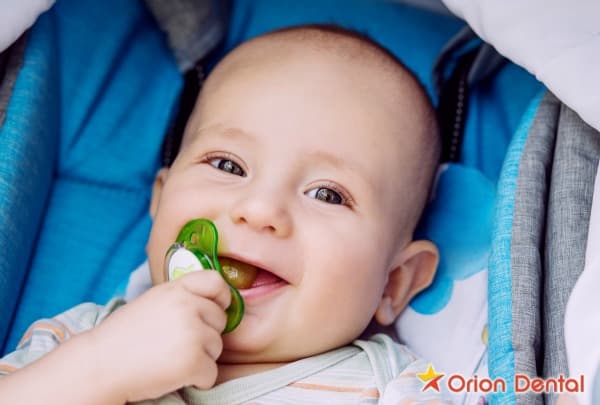
Pacifiers have been used by parents for centuries — long before the modern rubber version was patented in 1901, parents soothed their babies with knotted rags, wooden beads, and gum sticks. Today, pacifiers remain a common way to settle a fussy infant, and they may offer some benefits during the first year of life.
However, the question every parent eventually asks is: are pacifiers bad for my child's teeth? The answer depends largely on how long the habit continues. At Orion Dental's children's dentistry practice in Scarborough and Milton, we help parents navigate this decision with practical, evidence-based guidance.
Common
for infants to use a pacifier
Age 2
recommended weaning age
Age 4+
higher risk of dental effects
1901
modern pacifier patented
The Benefits of Pacifier Use
When used appropriately during infancy, pacifiers offer several genuine benefits. Understanding these helps parents make an informed decision rather than feeling guilty about offering one.
Known Benefits
- Soothing and self-regulation — satisfies the natural sucking reflex that helps babies calm down
- Pain management — non-nutritive sucking can help reduce discomfort during vaccinations and minor procedures
- Easier to wean than thumb-sucking — parents can control access and ultimately remove the pacifier
- Sleep support — helps some babies settle more easily at nap time and bedtime
A Brief History
Before modern pacifiers, parents across cultures used creative solutions to soothe teething babies. Ancient Egyptians used clay figures. In medieval Europe, knotted rags dipped in water or honey were common. The first rubber pacifier was patented in 1901, and today's versions are designed with child safety and orthodontic considerations in mind.
The Dental Risks of Prolonged Pacifier Use
While early pacifier use poses minimal dental risk, continuing past age twocan begin to affect how your child's teeth and jaws develop. The longer the habit persists — and the more vigorously a child sucks — the greater the potential for changes that may require orthodontic correction later.
| Dental Effect | What Happens | Risk Level After Age 2 | Reversible? |
|---|---|---|---|
| Open Bite | Front teeth don't meet when mouth closes | Moderate | Often, if habit stops early |
| Overjet | Upper front teeth slant outward | Moderate to High | Depends on duration |
| Crossbite | Upper teeth sit inside lower teeth | High after age 3–4 | May need orthodontics |
| Narrow Palate | Roof of mouth becomes narrower | High after age 3–4 | May need expansion |
The constant pressure from a pacifier can push the upper front teeth outward and the lower front teeth inward, alter the shape of the palate, and affect the alignment of the jaw. These changes are more likely to become permanent when the habit continues past age three or four, when the bones of the mouth and jaw are becoming more rigid.
Additional Risks
- Increased risk of ear infections with prolonged use
- Tooth decay if the pacifier is dipped in honey, sugar water, or sweetened liquids
- Potential interference with breastfeeding if introduced too early (before 4 weeks)
- Speech development delays if used excessively during waking hours past age two
Concerned About Pacifier Habits?
Our children's dentistry team can assess your child's bite and offer personalised weaning advice.
When Should Your Child Stop Using a Pacifier?
The Canadian Dental Association and most paediatric dental guidelines recommend weaning your child off the pacifier by age two. At this point, the non-nutritive sucking reflex has typically diminished, and the child is developmentally ready to adopt other soothing strategies.
If the habit continues past age two, it's important to start reducing use gradually. If it persists beyond age four, the risk of lasting dental changes increases significantly, and your dentist may want to closely monitor your child's bite, jaw alignment, and palate development during regular checkups.
0–6 Months
Low risk — satisfies sucking reflex
6–24 Months
Begin limiting daytime use
2–3 Years
Wean off — dental changes possible
4+ Years
Higher risk — orthodontic effects likely
Practical Strategies for Weaning Off the Pacifier
Every child is different, so what works for one family may not work for another. Here are several strategies that can help make the transition smoother:
Gradual Reduction
Start by limiting pacifier use to nap time and bedtime only, then phase it out entirely over a few weeks.
Substitute Comfort Objects
Introduce a favourite stuffed animal or blanket as a replacement soothing object.
Positive Reinforcement
Praise your child for going without the pacifier. A simple sticker chart can provide motivation for older toddlers.
The "Pacifier Fairy"
Create a ceremonial goodbye — your child "gives" the pacifier to a fairy or younger baby in exchange for a small reward.
Distraction Techniques
When your child asks for the pacifier, redirect their attention with a favourite activity, story, or song.
Talk to Your Dentist
If your child is struggling, your dentist can explain the importance of stopping in age-appropriate language during a visit.
Pacifier Hygiene and Safety Tips
If your child is still using a pacifier, these hygiene practices can minimise the risk of dental problems and keep the pacifier as safe as possible:
Hygiene Essentials
- Never dip the pacifier in honey, sugar, or any sweetened liquid
- Clean pacifiers regularly with warm water and mild soap — avoid using your own mouth to "clean" it, as this transfers cavity-causing bacteria
- Replace pacifiers frequently, especially if the rubber shows signs of wear or cracking
- Choose orthodontic pacifiers with a flat, symmetrical shape when possible
- Avoid attaching pacifiers to strings or ribbons that could pose a strangulation hazard
- Do not use a pacifier as a substitute for feeding — ensure your child's nutritional needs are met first
Get Personalised Guidance for Your Child
Pacifiers are neither entirely good nor entirely bad — the key is timing, duration, and awareness. If your child is approaching age two and still relies on a pacifier, or if you've noticed changes in their bite or tooth alignment, it's a good time to schedule a children's dental assessment. Our team can evaluate your child's dental development and help you create a practical plan for weaning.
Book a children's dental visit at our Scarborough or Milton office. Book an appointment or call 416-291-0306 (Scarborough) / 905-636-9770 (Milton).
Frequently Asked Questions
Common questions about pacifiers and dental health
At what age should my child stop using a pacifier?
Most dental professionals recommend weaning your child off the pacifier by age two. Prolonged use beyond this age — especially past age four — may increase the risk of dental problems including open bite, crossbite, and narrowing of the palate.
Can pacifier use cause permanent damage to teeth?
If pacifier use stops before age two, any changes to tooth alignment or jaw shape are typically temporary and self-correct. However, prolonged use past age three or four can cause lasting changes that may require orthodontic treatment to correct.
Is thumb-sucking worse than a pacifier?
Both habits can affect dental development if continued too long. However, pacifier use is generally considered easier to control and stop because you can take the pacifier away, whereas a thumb is always available. The dental effects of both are similar.
What kind of pacifier is best for dental health?
Orthodontic pacifiers with a flattened shape are designed to better accommodate the natural shape of a baby's mouth and palate. While no pacifier is completely risk-free, orthodontic designs may place less pressure on developing teeth and jaws.
Should I dip the pacifier in honey to soothe my baby?
No. Dipping a pacifier in honey, sugar water, or any sweet substance may increase the risk of tooth decay. It also poses a botulism risk for infants under twelve months. Always offer a clean pacifier without any added sweetener.
My child is three and still uses a pacifier. What should I do?
Start with a gradual approach — limit pacifier use to nap time and bedtime only, then phase it out entirely. Positive reinforcement, comfort alternatives, and a ceremonial "goodbye" can help. If you're struggling, your dentist can offer strategies and monitor your child's dental development.
Related Articles
Continue reading about children's dental health
Common Baby Teeth Problems Parents Should Know
From teething to tooth decay, learn about the most common issues affecting baby teeth.
Read moreWhen Should Your Child First Visit the Dentist?
Find out the ideal timing for your child's first dental visit and what to expect.
Read moreKids Dental Care: Why Good Brushing Starts Early
Build lifelong oral hygiene habits by starting with the right tools and techniques early.
Read more